Blog

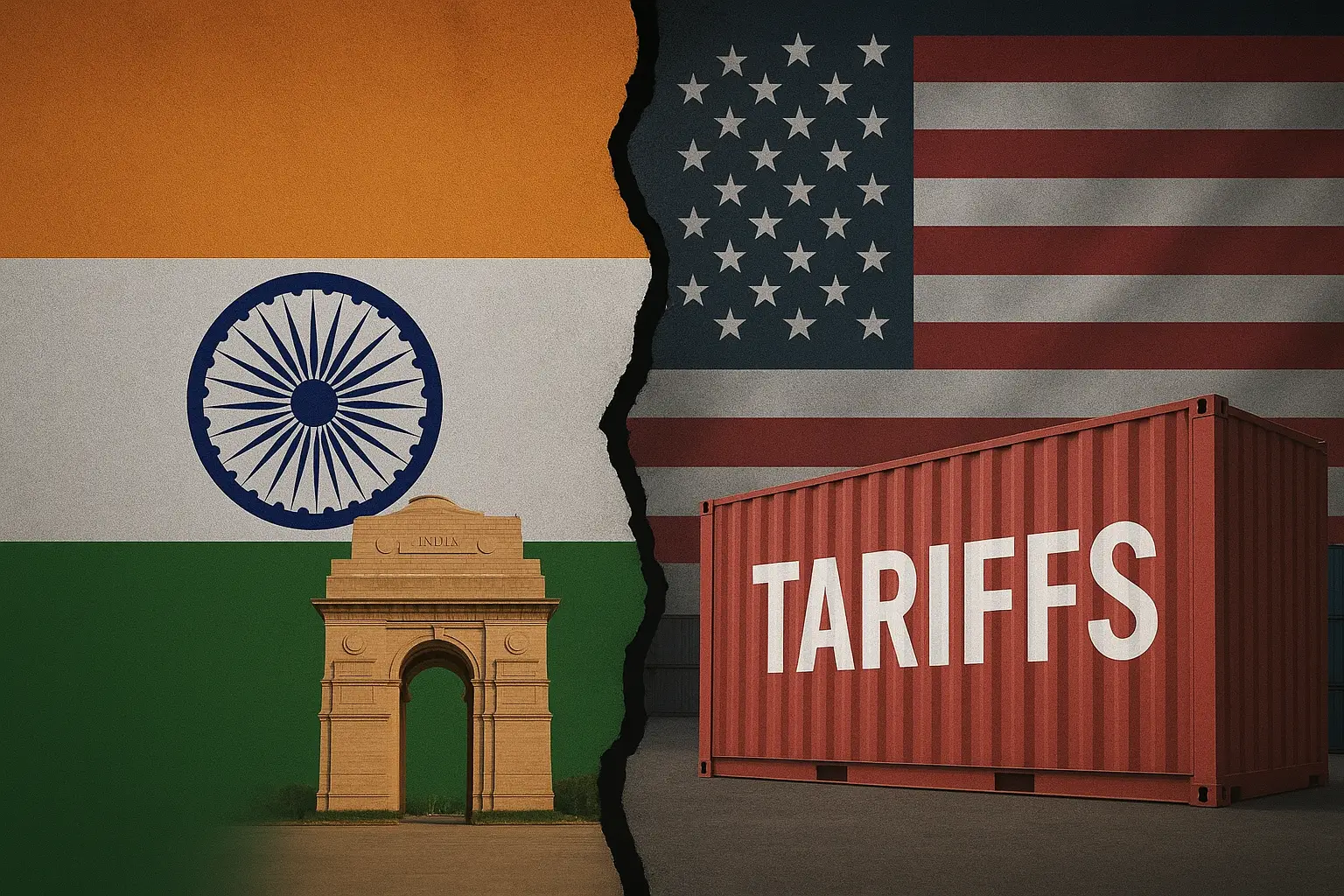
  • U.S. Tariffs Threaten to Slow India’s Growth Story

    U.S. Tariffs Threaten to Slow India’s Growth Story

    New Delhi, August 21, 2025 – For much of the past decade, India has been hailed as the world’s fastest-growing major economy, a country balancing rapid digitalization, booming consumption, and global investor confidence. But that optimism is now facing a fresh challenge: the looming threat of steep U.S. tariffs.

    The Sharpest Downgrade in Asia

    Indian companies have just recorded the steepest earnings downgrade in Asia. Analysts cut profit estimates for the next 12 months by an average of 1.2%, reflecting rising fears that American trade barriers could disrupt growth. While this figure may seem modest, the signal is powerful — global investors are beginning to lose some of their earlier confidence in the Indian market.

    Until recently, India was the top choice for Asian fund managers, ahead of China and other emerging markets. But the tariff threat has shifted sentiment. India has slipped from being seen as a “must-own” growth story to one that carries new uncertainties.

    Tariffs and Their Potential Impact

    The United States is considering tariffs of up to 50% on a broad range of imports. For India, the direct exposure might appear limited — only about 9% of corporate revenues come from the U.S. market. But the consequences go far beyond those numbers.

    Economists warn that the tariffs could shave as much as 1 percentage point off India’s GDP growth. With India currently projected to grow at around 6.5% this year, such a slowdown would be felt across industries, jobs, and household incomes.

    “Trade wars rarely stop at direct numbers. They create second-order effects: disrupted supply chains, falling investor confidence, and delayed investment decisions,” explained a senior analyst at a Mumbai-based brokerage.

    The Sectors Under Pressure

    Several sectors are already bracing for impact:

    • Automobiles: India exports a significant volume of cars and auto components to the U.S. Higher tariffs could make them uncompetitive overnight.
    • Consumer goods: From textiles and garments to electronics, many Indian companies rely on U.S. buyers. Price hikes would threaten their global market share.
    • Capital goods and machinery: With rising costs and uncertainty, Indian manufacturers risk losing contracts to Southeast Asian rivals like Vietnam and Indonesia.

    The Investor Mood Turns Cautious

    The change is visible in financial markets. Foreign portfolio investors, who pumped billions into India last year, are turning cautious. Some are reallocating funds to smaller Asian economies less exposed to U.S. trade policy.

    “India remains a growth story, but the tariff risk is now part of every investor conversation,” said a Hong Kong–based strategist.

    The Human Angle – Jobs and Livelihoods

    Beyond balance sheets and market charts, the human impact could be significant. If demand for Indian exports falls, factories producing cars, garments, and electronics may scale back operations. That could mean job losses for thousands of workers, particularly in manufacturing hubs like Gurugram, Pune, and Tiruppur.

    For small and medium enterprises (SMEs), which often supply larger exporters, the pain could be sharper. Many operate on thin margins and lack the financial cushion to absorb sudden losses. “We already work on 2-3% margins. If U.S. buyers cancel orders, we cannot survive for long,” said a textile manufacturer from Tamil Nadu.

    How India Can Respond

    Policymakers in New Delhi are aware of the risks. Three key strategies are being discussed:

    1. Strengthening Domestic Demand: With a 1.4 billion-strong population, India’s internal market is itself a powerful growth engine. Government spending and consumer incentives could help absorb external shocks.
    2. Diversifying Export Markets: Indian trade officials are intensifying talks with Europe, Africa, and Latin America to reduce reliance on the U.S. and China. Bilateral trade agreements could open new doors.
    3. Boosting Self-Reliance: Under programs like Make in India and Atmanirbhar Bharat, India is aiming to expand domestic manufacturing and reduce vulnerability to external disruptions.

    A Test for India’s Growth Dream

    For now, India’s growth story remains intact — but tested. The country’s strong digital economy, rising middle class, and infrastructure push provide resilience. Yet the global environment is becoming more complex, with protectionist trade policies threatening open markets.

    India’s challenge is to turn this crisis into opportunity. If it can strengthen its domestic economy, diversify its partnerships, and accelerate reforms, it may not only withstand the tariff shock but also emerge stronger.

    As one Delhi-based economist put it: “The tariffs are a reminder that India cannot rely solely on global goodwill. It must build resilience at home while engaging smartly abroad.”

    Conclusion

    The U.S. tariffs are more than a trade dispute — they are a stress test for India’s ambition to become the next global economic powerhouse. Whether India weathers this storm or stumbles will depend on how quickly it adapts, innovates, and protects its people from the fallout.

    For millions of Indians hoping for better jobs and rising incomes, the stakes could not be higher.
  • Mumbai Rains Paralyze City: Chaos, Courage, and Calls for Better Preparedness

    Mumbai Rains Paralyze City: Chaos, Courage, and Calls for Better Preparedness

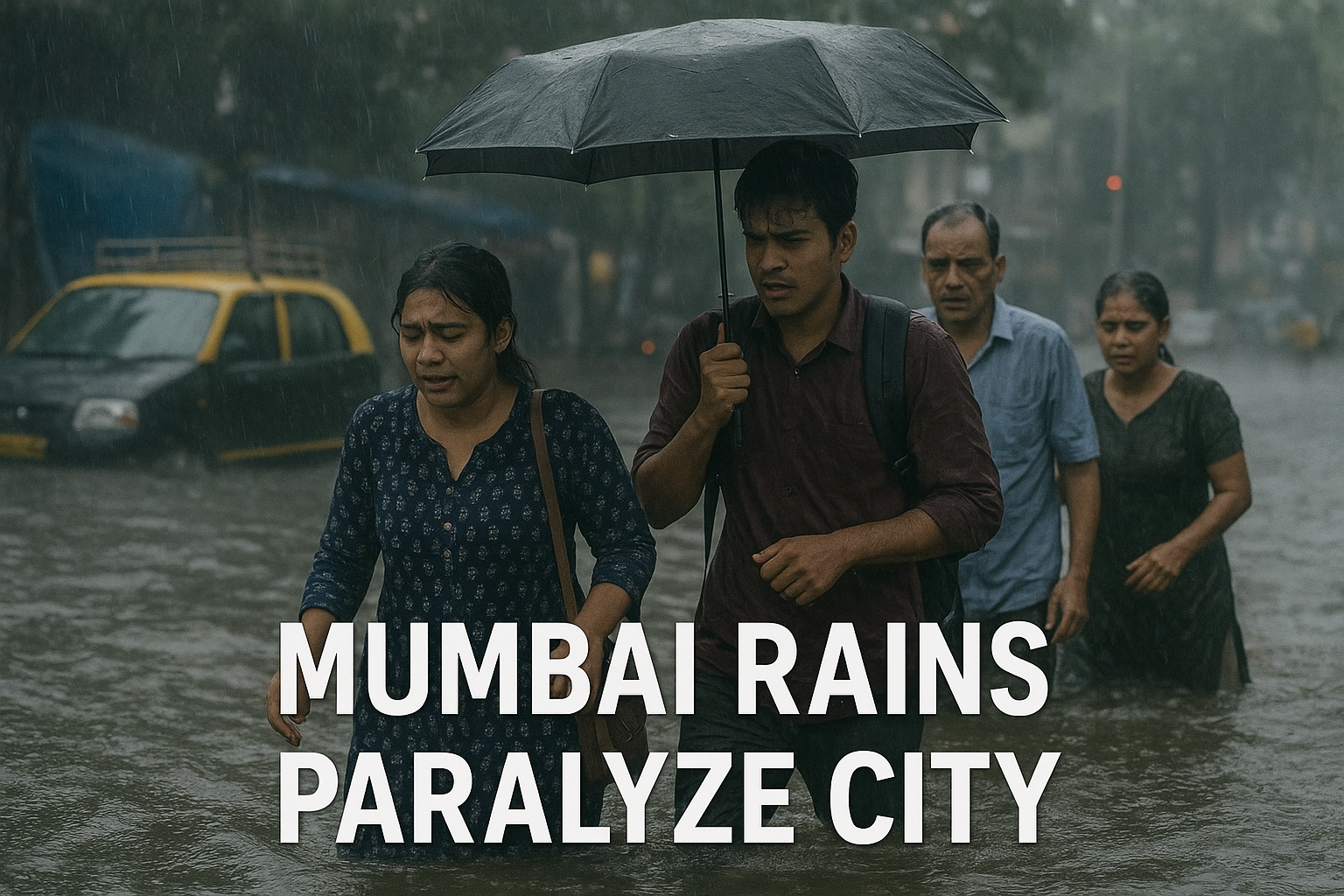
    Mumbai, August 19, 2025: For three consecutive days, Mumbai has been battered by relentless monsoon rains that have brought India’s financial capital to a standstill. On Monday, August 18, the city witnessed some of the heaviest rainfall of this season, leading the India Meteorological Department (IMD) to issue a “Red Alert” across the region. Schools and colleges were ordered shut, offices struggled with absenteeism, and daily commuters faced a nightmare as waterlogging and traffic chaos gripped the city.


    Record Rainfall in 24 Hours

    The numbers tell a dramatic story. Several parts of Mumbai recorded over 100 mm of rain in just 24 hours. Dahisar topped the charts with 188 mm, followed by Kandivali (150 mm), Vikhroli (135 mm), Chembur (124 mm), while Santacruz and Juhu reported 123 mm each. These staggering figures underline the intensity of Mumbai’s rain fury, making it one of the wettest spells of the year so far.


    Schools in Confusion, Parents in Panic

    What caught many families off guard was the last-minute decision by the Brihanmumbai Municipal Corporation (BMC) to declare a half-day holiday for schools and colleges. While the order was intended to ensure student safety, many institutions received the notification late, leaving students stranded in flooded streets and parents scrambling to arrange pickups.

    In Matunga, a school bus was stuck in waist-deep water. Local police and volunteers formed human chains to rescue the children and guide them to safety. Stories like these not only highlight the risks children face in extreme weather but also reflect the spirit of quick response and human compassion.


    Public Transport in Disarray

    Mumbai’s lifeline — its local trains — was heavily disrupted as water levels rose above tracks in several areas. Many trains were delayed or canceled, stranding thousands of commuters. On the roads, the situation was no better. The Western Express Highway, one of the busiest arteries, turned into a slow-moving river of vehicles. Office-goers, delivery workers, and daily wage earners alike were caught in long traffic snarls.

    For many, the choice was stark: either brave knee-deep waters to reach their destinations or return home and lose a day’s wages.


    Alerts and Technology to the Rescue

    On the brighter side, the IMD’s color-coded alert system (Red, Orange, Yellow) proved vital in informing citizens about the severity of the situation. For Tuesday, the forecast shifted to Orange and Yellow alerts, signaling slightly reduced intensity but still urging caution.

    Adding to preparedness, IIT-Bombay in collaboration with IMD has rolled out hyperlocal rain and flood alerts that update every 15 minutes. This initiative, delivered via mobile notifications and online dashboards, is already helping citizens make informed decisions about travel and safety.


    Humanity Amid Hardship

    Even as the rain disrupted lives, it also brought forward acts of kindness and responsibility. Bollywood actor Harshvardhan Rane used his social media to send out a heartfelt appeal:

    “Please avoid ordering food from outside today. Delivery workers are also struggling in these conditions. Let’s cook at home and ease their burden.”

    Such appeals struck a chord with many Mumbaikars, reminding them that small personal sacrifices can make a big difference for those on the frontline during extreme weather.


    The Bigger Picture: Mumbai’s Urban Challenge

    Experts point out that these events are not just about a single day’s rainfall but part of a larger urban and climate challenge. Rapid urbanization, inadequate drainage systems, and the shrinking of natural water-absorbing areas like wetlands and mangroves have made Mumbai increasingly vulnerable to flooding.

    The city’s monsoon story is no longer just about inconvenience — it is about climate resilience. Each season reveals the cracks in infrastructure and governance. Without significant long-term investments in urban planning, Mumbai risks repeating this cycle year after year.


    Lessons from the Deluge

    This week’s rains have offered both warnings and insights:

    • Emergency Alerts Matter: Timely warnings from IMD saved lives, but sudden last-minute decisions — like school closures — created chaos. Clearer communication is vital.
    • Infrastructure Needs Urgent Attention: Waterlogging on highways and train tracks shows that Mumbai’s drainage systems are struggling to cope with extreme rainfall.
    • Community Spirit is Key: From police forming human chains to citizens helping strangers, the resilience of Mumbaikars continues to shine through.
    • Technology Can Empower: Hyperlocal rain alerts and AI-based flood prediction tools are game changers — but their reach must expand to all citizens, especially those without smartphones.

    A City Tested, A City That Endures

    Mumbai’s relationship with the monsoon is one of love and fear. The rains bring relief from summer heat, but they also expose the fragility of urban life in a megacity. This week, the downpour has tested every aspect of Mumbai — its infrastructure, its administration, and its people.

    Yet, as always, the city endures. The sight of strangers sharing umbrellas, shopkeepers offering tea to stranded commuters, and volunteers guiding children to safety is a reminder that while rain may flood the streets, it cannot wash away Mumbai’s spirit.


    In Conclusion

    The heavy rains of August 2025 are more than just a seasonal disruption. They are a wake-up call for a city that prides itself on resilience but urgently needs smarter infrastructure, better communication systems, and stronger climate action plans.

    Until then, Mumbaikars will continue to adapt, adjust, and endure — one flooded street, one disrupted train, and one shared act of kindness at a time.

  • RS 15,000 in 1st private job! : PM Modi Announced Viksit Bharat Rozgar Yojana

    RS 15,000 in 1st private job! : PM Modi Announced Viksit Bharat Rozgar Yojana

    PM Modi Launches PM-VBRY: Historic Employment Initiative for Youth

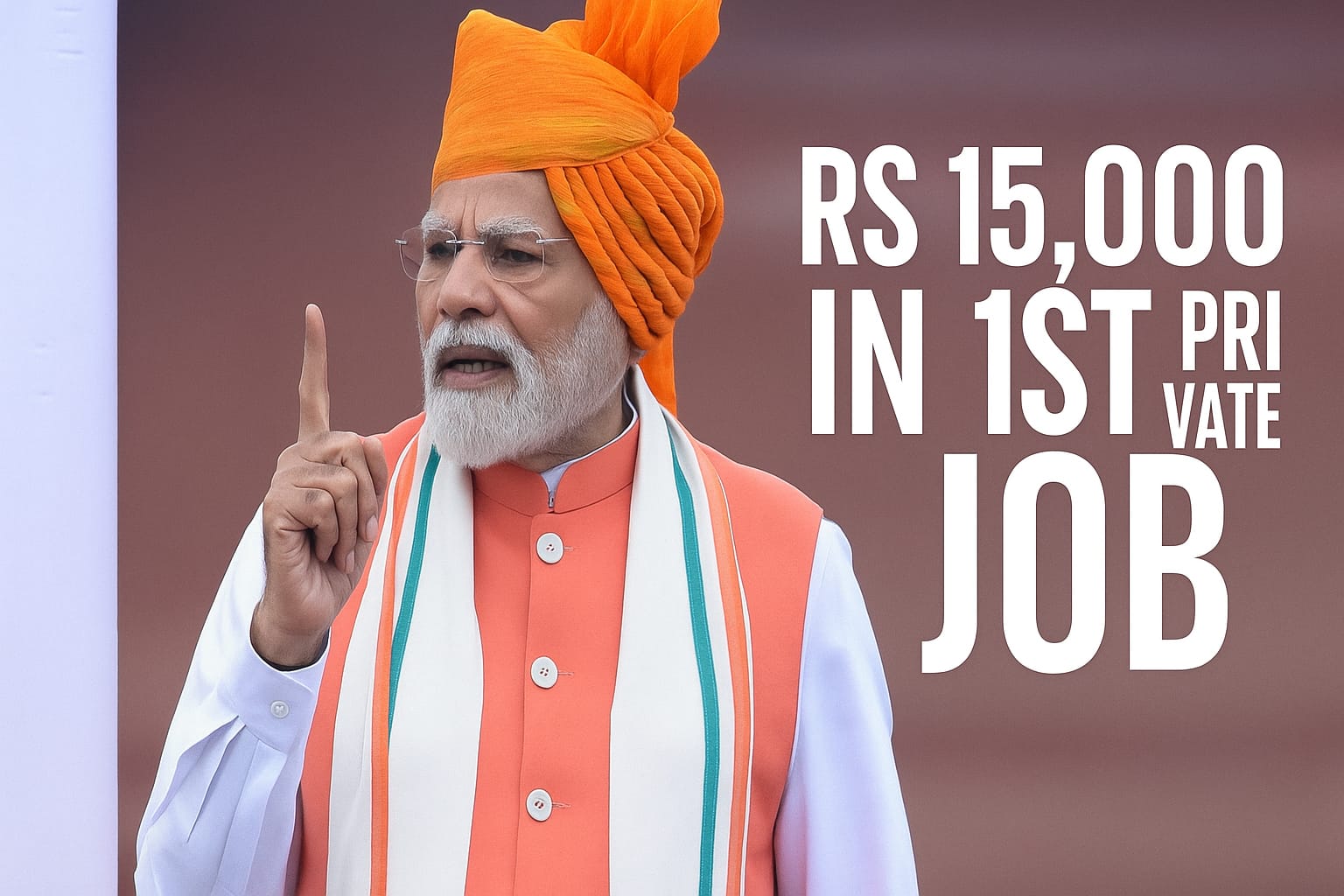
    New Delhi, August 15, 2025 – On India’s 78th Independence Day, Prime Minister Narendra Modi announced the launch of the Pradhan Mantri Viksit Bharat Rozgar Yojana (PM-VBRY) from the Red Fort. With a total allocation of ₹99,446 crore, the scheme is aimed at tackling youth unemployment and providing financial incentives for first-time private sector employees. The ambitious program seeks to generate over 3.5 crore jobs within the next two years, marking one of the largest employment-focused initiatives in India’s recent history.

    Objectives and Vision

    The PM-VBRY is designed to provide young Indians with meaningful employment opportunities while encouraging a culture of financial literacy and savings. The scheme targets first-time private sector employees, ensuring that youth entering the workforce are financially supported and motivated to retain long-term employment.

    Prime Minister Modi emphasized that the scheme is part of a broader vision to make India a global employment hub, providing equitable opportunities for every young citizen. By offering incentives to both employees and employers, the government aims to stimulate economic growth, reduce unemployment rates, and strengthen the formal job sector across the country.

    Financial Incentives for Employees

    One of the key features of PM-VBRY is the financial support provided to first-time job seekers. Eligible employees will receive ₹15,000 in two installments:

    First Installment: ₹7,500 after six months of continuous employment.

    Second Installment: ₹7,500 after twelve months, upon completion of a financial literacy program.

    Additionally, a portion of the second installment will be deposited into a designated savings account, encouraging long-term savings habits. This structure ensures that employees benefit not only in the short term but also develop a foundation for financial security and responsible money management.

    Incentives for Employers

    PM-VBRY also focuses on motivating employers to hire and retain new employees. Companies that hire fresh talent will receive a monthly incentive of ₹3,000 per employee. For manufacturing companies, this benefit extends up to four years, compared to two years for other sectors.

    By offering these incentives, the government hopes to boost private sector employment, particularly in industries that are key drivers of economic growth. This approach ensures a sustainable employment ecosystem where both employees and employers gain tangible benefits.

    Implementation Timeline and Administration

    The PM-VBRY came into effect on August 1, 2025, and will run until July 31, 2027. The Employees’ Provident Fund Organisation (EPFO) is responsible for administering the scheme, ensuring transparency and efficient processing.

    Employers and employees can register online via the official EPFO portal, making the application process digital-friendly and accessible nationwide. This move is expected to reduce paperwork, prevent delays, and facilitate a smooth disbursement of incentives.

    Eligibility Criteria

    To qualify for the scheme, employees must:

    Be first-time job seekers in the private sector.

    Join an EPFO-registered company between August 1, 2025, and July 31, 2027.

    Not have been members of an Exempted Trust or EPFO before August 1, 2025.

    Ensure EPF contributions are received by the relevant authorities in a timely manner.

    Employers must hire eligible employees, maintain EPFO compliance, and adhere to all scheme regulations to claim incentives.

    Expected Impact on Economy and Youth Employment

    The PM-VBRY is projected to create 1.92 crore jobs for first-time job seekers. Beyond job creation, the scheme will promote financial literacy, long-term savings, and employment formalization. By moving young workers from informal to organized sectors, the government aims to strengthen India’s workforce and stimulate economic productivity.

    Experts believe that initiatives like PM-VBRY will help reduce the youth unemployment rate, support industrial growth, and empower a new generation of professionals to contribute effectively to the national economy.

    Sectoral Focus and Opportunities

    While PM-VBRY applies across all sectors, there is a strategic focus on manufacturing and high-growth industries. By incentivizing the hiring of youth in these sectors, the government aims to address the skills gap and align workforce development with industry requirements. This ensures that young employees not only secure jobs but also acquire skills for long-term career growth.

    Global Relevance

    Globally, countries have employed similar incentive-driven employment models to address youth unemployment. By providing dual incentives—for employees and employers—PM-VBRY aligns India with international best practices in workforce development. The scheme encourages retention, boosts productivity, and creates a structured pathway for young professionals to establish stable careers

    The Pradhan Mantri Viksit Bharat Rozgar Yojana represents a landmark initiative aimed at empowering India’s youth while stimulating private sector growth. By combining financial incentives, employer support, and mandatory financial literacy programs, PM-VBRY ensures that the next generation of workers is both employed and financially secure. With this program, India takes a decisive step toward becoming a hub of opportunities for young professionals and strengthening the country’s overall employment ecosystem.

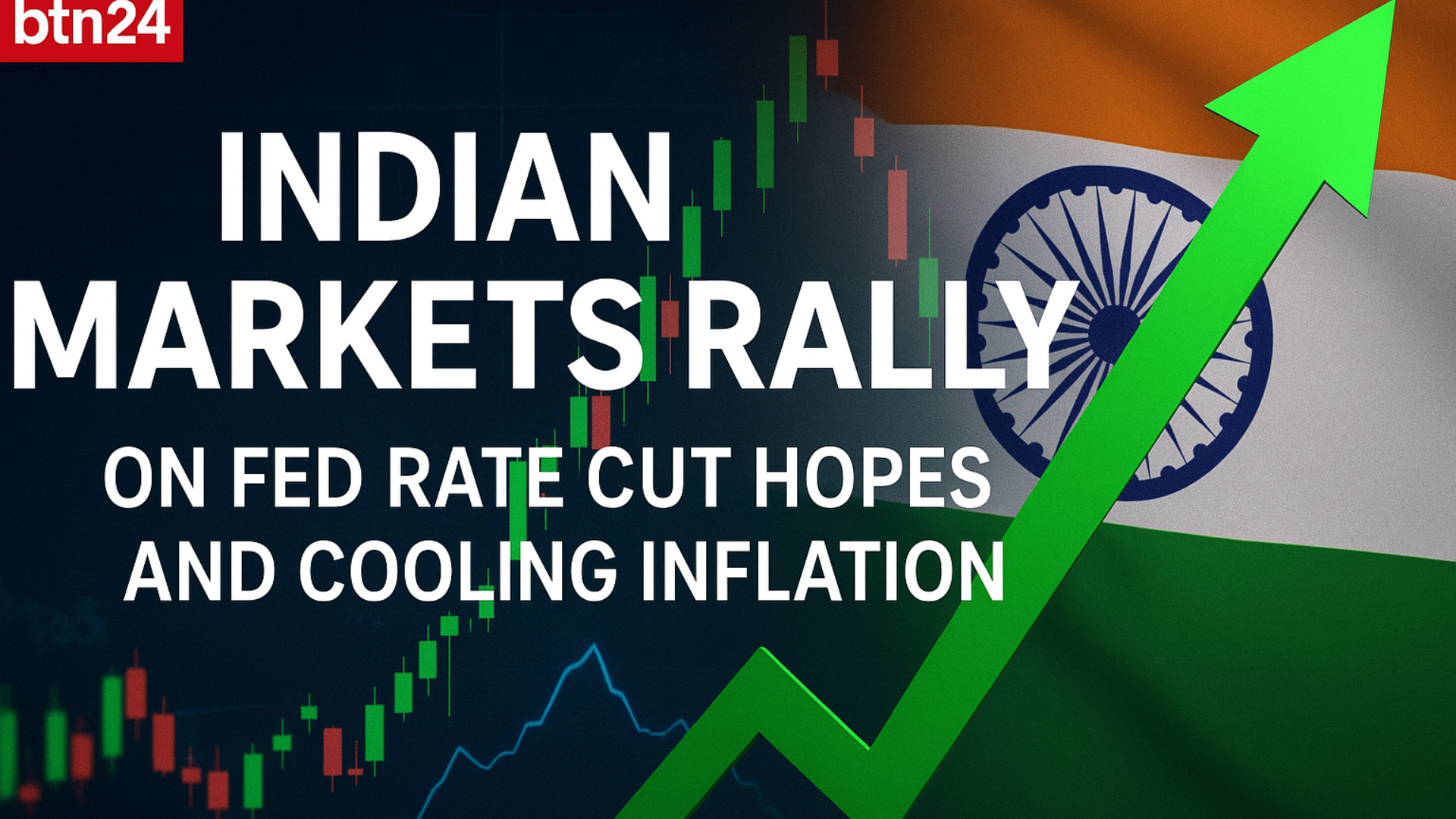
  • Indian Markets Rally on Fed Rate Cut Hopes and Cooling Inflation

    Indian Markets Rally on Fed Rate Cut Hopes and Cooling Inflation

    Sensex jumps 304 points, Nifty crosses 24,600 as investor sentiment turns bullish

    New Delhi, August 14, 2025
    The Indian stock market ended Wednesday’s session on a strong note, propelled by optimism over potential U.S. Federal Reserve rate cuts and the sharp cooling of domestic retail inflation to an eight-year low. The rally was broad-based, with key indices hitting fresh highs, metal and auto stocks leading the charge, and investor wealth swelling by over ₹2 lakh crore in a single day.


    A Day of Strong Gains

    The BSE Sensex surged 304 points, or 0.40%, to close at 81,157.32, while the NSE Nifty 50 climbed 131.95 points (0.54%) to settle at 24,610.15. Both indices opened in the green, sustained momentum throughout the day, and closed near their intraday highs.

    Market breadth favored the bulls — 1,890 shares advanced, 1,420 declined, and 102 remained unchanged on the Bombay Stock Exchange. The Nifty Midcap 150 and Nifty Smallcap 250 outperformed the benchmarks, closing 0.5% and 0.6% higher respectively, underscoring the strength in broader markets.


    Why the Markets are Rising

    1. Cooling U.S. Inflation

    July’s U.S. retail inflation data came in lower than expected, sparking hopes that the Federal Reserve could cut interest rates as early as September. The softer inflation figure eased concerns about prolonged monetary tightening, leading to a global rally that spilled over into Indian equities.

    2. Domestic CPI at 8-Year Low

    Closer to home, India’s Consumer Price Index (CPI) inflation cooled to 1.55% in July, its lowest since 2017, comfortably within the Reserve Bank of India’s target band of 2–6%. Economists believe this could give the RBI additional room to maintain a supportive monetary stance, further bolstering market sentiment.

    3. Strong Sectoral Performance

    • Metals: Riding on higher commodity prices and expectations of renewed infrastructure demand.
    • Auto: Benefiting from steady retail sales and easing input costs.
    • Healthcare & Pharma: Gaining on defensive buying and export optimism.
    • Financials: Supported by healthy quarterly earnings and lower credit cost forecasts.

    Top Gainers and Losers

    Among the Nifty 50 constituents:

    • Top gainers: Tata Steel (+3.2%), JSW Steel (+2.9%), Bajaj Auto (+2.4%), Sun Pharma (+2.3%), and ICICI Bank (+2.1%).
    • Top losers: Tech Mahindra (-1.2%), Infosys (-0.9%), and HCL Tech (-0.7%), as IT stocks saw mild profit-taking following recent gains.

    Investor Wealth Swells

    The sharp rally added an estimated ₹2.05 lakh crore to investor wealth in a single day, with the BSE market capitalization crossing the ₹460 lakh crore mark. Analysts say the market is benefitting from a “Goldilocks” macroeconomic environment — moderate inflation, robust corporate earnings, and supportive global cues.


    SEBI’s Regulatory Push

    On the regulatory front, the Securities and Exchange Board of India (SEBI) proposed new guidelines to formally integrate algorithmic and proprietary trading within stockbroker regulations. The move aims to enhance transparency, curb potential misuse of high-frequency trades, and strengthen oversight. Public feedback on the draft framework has been invited until September 3, 2025.


    Global Market Influence

    Indian equities tracked gains across Asia, where markets rallied on the back of dovish central bank expectations.

    • Japan’s Nikkei 225 climbed 0.6%
    • Hong Kong’s Hang Seng advanced 1.2%
    • China’s Shanghai Composite rose 0.5%

    In the U.S., futures pointed to a higher open for Wall Street indices, with traders pricing in a 70% probability of a Fed rate cut next month.


    Expert Views

    Radhika Shah, Senior Analyst at Axis Securities, told btn24:

    “Cooling inflation both in India and the U.S. has come as a double dose of positive news. This environment could support further gains in Indian equities, but investors should remain cautious of global geopolitical developments that could trigger volatility.”

    Amitabh Sinha, Head of Research at Capital Edge, added:

    “While today’s rally is encouraging, the market has run up considerably. We expect some profit-booking at higher levels, but the medium-term outlook remains bullish as long as macro indicators stay supportive.”


    What This Means for Investors

    For retail investors, the current rally offers opportunities but also warrants discipline:

    • Avoid chasing stocks that have already surged sharply in recent sessions.
    • Focus on sectors with strong earnings visibility such as banking, autos, and select metals.
    • Maintain a diversified portfolio to manage risk.

    Outlook for the Coming Weeks

    Market watchers expect the Nifty to test 24,800–25,000 levels in the short term if global cues remain favorable. Any sharp reversal in U.S. interest rate expectations or a spike in crude oil prices could, however, dampen the bullish momentum.


    Bottom Line:
    The Indian stock market’s rally on August 13, 2025, reflects a rare alignment of domestic and global positives. With inflation cooling and hopes of a U.S. rate cut rising, investors are riding a wave of optimism — one that could carry equities to new record highs in the weeks ahead.

  • Aadhaar 2025: 15 Crucial Updates Every Indian Must Know — BTN24 Exclusive

    Aadhaar 2025: 15 Crucial Updates Every Indian Must Know — BTN24 Exclusive

    By BTN24 Digital Desk | Updated July 2025
    India


    “Aadhaar is more than just an ID — it’s your financial, legal, and digital identity in India. Staying updated isn’t a choice anymore — it’s your responsibility.”


    Why You Should Read This

    As we move deeper into a digital-first India, the Aadhaar card has become the foundation for accessing almost every public and private service — from banking and taxation to pension, subsidy, SIM activation, and education.

    Yet, millions of people across India are unaware of how to secure, update, and use their Aadhaar correctly, especially with the new changes announced for 2025.

    At BTN24, we believe information is empowerment. So here’s our verified list of the top 15 Aadhaar updates and facts every Indian must know — because ignoring them could cost you money, access, and identity protection.


    BTN24 Deep Dive: 15 Must-Know Aadhaar Facts for 2025


    1. Aadhaar Is Not Proof of Citizenship

    Aadhaar is issued to residents of India, not necessarily citizens. It verifies identity and address, but cannot be used to prove nationality under any legal framework.


    2. Aadhaar Updates Are Free Till Sept 14, 2025

    UIDAI has extended free online Aadhaar update services. If you need to change your name, address, or birth date, visit myaadhaar.uidai.gov.in and complete the update using OTP-based login.


    3. Biometric Update is Mandatory at Age 5 and 15

    Children who enrolled for Aadhaar before age 5 or 15 must update their biometric data (fingerprints, iris scan, and photo) once they cross those age milestones. Failure to do so may lead to Aadhaar becoming inactive for official use.


    4. Always Use Masked Aadhaar When Sharing

    To reduce the risk of identity theft, download and use the Masked Aadhaar. It only displays the last 4 digits of your Aadhaar number, keeping the rest private.


    5. Link Aadhaar with PAN, Bank, and UPI

    This is crucial. If your Aadhaar is not linked with your PAN card, bank accounts, and UPI apps, your financial services may get temporarily blocked or rejected during KYC checks.


    6. Aadhaar Is Voluntary for Private Services

    As per the Supreme Court of India, private entities (schools, mobile operators, companies) cannot force Aadhaar as a condition for service. Aadhaar is optional, not mandatory, unless specifically required by law.


    7. Lost Aadhaar? Order a PVC Card for ₹50

    UIDAI allows you to order an official, waterproof, secure PVC Aadhaar Card for just ₹50. It includes a hologram, secure QR code, and micro text — better than paper prints or photocopies.


    8. Aadhaar Seeding is Mandatory for Pensioners

    Retired individuals must ensure that their Aadhaar is linked with the Pension Payment Order (PPO) and bank account to avoid delay or rejection in monthly disbursals.


    9. You Can View Aadhaar Authentication History

    Anyone can check when and where their Aadhaar was used for verification via the UIDAI portal. This helps detect unauthorized use and improve digital safety.


    10. Use Virtual ID (VID) Instead of Aadhaar Number

    You can generate a Virtual ID, a temporary 16-digit number that works like Aadhaar during eKYC. It allows authentication without revealing your actual Aadhaar number — safer for digital transactions.


    11. Blue Aadhaar for Children Below 5

    Children below the age of 5 receive a Blue Aadhaar, which doesn’t require biometrics. However, biometric updates are mandatory at ages 5 and 15.


    12. New Aadhaar PVC Cards are Smarter and Safer

    The upgraded PVC cards now include security features like ghost image, hologram, micro text, and UV printing, making them tamper-proof and more durable than standard printouts.


    13. Use DigiLocker to Store Aadhaar Securely

    Instead of emailing or uploading your Aadhaar copy, link it with DigiLocker, the official cloud storage app by the Government of India. It ensures Aadhaar is accessible, digitally signed, and encrypted.


    14. Avoid Middlemen – Use UIDAI Official Portals

    Most Aadhaar updates and reprints are either free or cost ₹50. Avoid unauthorized agents who often charge ₹100–300 for the same services. Always use uidai.gov.in.


    15. Misuse of Aadhaar is a Punishable Offense

    Aadhaar fraud, impersonation, or unauthorized sharing of Aadhaar numbers is a legal offense under the Aadhaar Act, 2016. The penalty can include fines and imprisonment.


    BTN24 Recommends – Safety Tips

    1. Use Masked Aadhaar or VID when possible
    2. Never share OTPs linked to Aadhaar with anyone
    3. Avoid uploading Aadhaar to WhatsApp, Drive, or email
    4. Check Aadhaar usage logs monthly
    5. Rely on official UIDAI channels only


    Final Words from BTN24

    Aadhaar is no longer a basic document — it’s your entry point into India’s digital economy. Used right, it simplifies your life. Used wrong, it can complicate everything from banking to benefits to legal identity.

    Stay informed. Stay secure.
    Share this article with your family, especially senior citizens, students, and digital first-timers.

    For more verified updates, stay tuned with BTN24 – India’s voice in the digital age.

  • ⚡ JP Power Rockets Over 15% — A Surge Backed by Big Moves and Bigger Hopes

    ⚡ JP Power Rockets Over 15% — A Surge Backed by Big Moves and Bigger Hopes

    Mumbai | July 7, 2025

    In a day that lit up the trading screens, Jaiprakash Power Ventures Ltd (JP Power) delivered a dramatic show at the markets, soaring over 15% intraday. It wasn’t just a lucky bounce — this rally was powered by real news, real action, and a sense of renewed belief among investors.

    Two major developments turned up the heat:

    • A high-stakes acquisition bid from none other than the Adani Group for JP Power’s parent company, and
    • A strong and confidence-boosting Annual General Meeting (AGM) held over the weekend.

    By the closing bell, JP Power was just a breath away from its 52-week high, with over 50 million shares traded on the BSE alone — an electrifying reminder of the buzz building around the company.


    🚨 What’s Driving the Buzz?

    1. Adani Steps In — and Everyone’s Watching

    Whispers turned into headlines when news broke that the Adani Group has emerged as the front-runner in a ₹12,500 crore bid to acquire Jaiprakash Associates (JP Associates) — the parent company of JP Power.

    The deal reportedly includes ₹8,000 crore in upfront cash. That’s not small change — that’s strategic muscle.

    Now here’s the kicker: JP Power holds a 24% stake in JP Associates. So if Adani takes control, it could mean serious shifts in structure, synergy, and valuation.

    “If Adani successfully acquires JP Associates, we’re looking at a massive value unlock for JP Power. Synergies between cement and power assets could be game-changing,” said G. Chokkalingam, Founder of Equinomics Research.

    In short: this isn’t just about a deal. It’s about a possible transformation.


    2. AGM That Hit the Right Notes

    While the takeover talk made headlines, the company’s 30th AGM on July 5 brought in substance. Held virtually, the meeting wasn’t flashy — but it was firm.

    Highlights included:

    • Adoption of audited financials for FY 2024–25
    • Reappointment of directors and auditors
    • Reassuring signals from leadership

    Investors left with more clarity and, more importantly, more confidence. And in a market that thrives on sentiment, that confidence counts.


    📊 What the Charts Say

    • Price Action: Up over 15% intraday, with the stock trading well above all its key moving averages.
    • Volume: ~50 million shares changed hands — nearly 6x the usual average.
    • RSI: Nearing 70 — technically approaching “overbought,” but with momentum this strong, that could be fuel, not friction.

    If the momentum holds, the next resistance lies around ₹23.75 to ₹24.50. That’s within reach.


    💰 Financial Snapshot: FY 2024–25

    MetricValue
    Revenue₹1,366.7 crore (vs ₹1,863.6 cr YoY)
    Net Profit (Q4)₹155.7 crore (↓ 73% YoY)
    Net Profit (FY25)₹813.6 crore (↓ from ₹1,022 cr)
    Market Capitalization~₹14,800 crore
    P/E Ratio~18.1x
    P/B Ratio~1.06x
    ROCE / ROE10.3% / 6.8%

    Yes, profits dipped — but the market seems to be betting on what’s coming, not just what’s behind.


    🏗️ The Bigger Picture: JP Associates and the Battle for Control

    JP Associates, deep in insolvency resolution, has attracted some big names:

    • Adani Group
    • Vedanta
    • Dalmia Bharat
    • Jindal Power
    • PNC Infratech

    Creditors have already turned down a late offer from the Suraksha Group due to timing issues — tightening the field. With over ₹57,000 crore in creditor claims, this is one of the bigger battles in India Inc’s debt saga.

    And JP Power is right in the middle of it.


    🔭 What’s Next?

    ✔️ Outcome of the Adani bid — the single most critical trigger
    ✔️ Q1 FY26 earnings — especially debt handling and growth momentum
    ✔️ Technical breakouts — does ₹24 break or bounce?
    ✔️ Sector outlook — how energy & infra shape post-election policy


    💬 Expert Take:

    “This is a textbook re-rating story. JP Power was written off by many — but this may be the comeback script. If the Adani deal clicks, we’re looking at a long-term breakout,” said a Mumbai-based fund manager on condition of anonymity.


    📌 Bottom Line

    JP Power isn’t just rising — it’s rewriting the narrative. From being seen as a struggling power stock, it’s now turning heads on Dalal Street with serious momentum, strategic headlines, and strong backing.

    Whether this surge sustains or pauses for breath, one thing’s clear: JP Power is back on the radar.


    Disclaimer: This article is for informational purposes only. Always consult a qualified financial advisor before making investment decisions.

  • Stock Picks for July 4: UPL & Chennai Petroleum Look Promising

    Stock Picks for July 4: UPL & Chennai Petroleum Look Promising

    Image Credit: Mohamed Hassan / Pixabay

    If you’re tracking the markets this week, keep an eye on UPL and Chennai Petroleum Corporation. According to a recent report by Bajaj Broking Research, both stocks show strong potential for short-term gains.

    The brokerage suggests buying UPL in the ₹670–₹690 range, with a target price of ₹747. The stock has been showing steady momentum, supported by positive market sentiment.

    For Chennai Petroleum, the recommended buy range is ₹700–₹720, aiming for a target of ₹787. Analysts point to strong fundamentals and improving performance in the oil & gas sector as key drivers.

    This comes as the Nifty 50 touched a new nine-month high of 25,669, driven by broad-based market participation and growing investor confidence.

    Note: These are expert suggestions, not financial advice. Always do your own research or talk to a professional before investing.

  • 💱 Rupee Set to Slip Against Dollar as U.S. Jobs Data Shakes Fed Rate Cut Hopes

    💱 Rupee Set to Slip Against Dollar as U.S. Jobs Data Shakes Fed Rate Cut Hopes

    Image by Rupixen on Pixabay

    July 4, 2025 — New Delhi
    India’s currency markets are bracing for a slide in the rupee today, as stronger-than-expected U.S. employment data signals a potential pause in the Federal Reserve’s rate-cut plans—strengthening the dollar and pressuring emerging market currencies.

    According to currency dealers and early market projections, the rupee is likely to open in the ₹85.46–₹85.50 range, down from Thursday’s closing level of ₹85.31 per U.S. dollar.

    “U.S. job growth is outpacing expectations. This has triggered a rally in the dollar index and reduced chances of a July rate cut,” said a senior forex analyst at Mumbai-based investment firm.

    🔍 What Triggered the Slide?

    The catalyst was the June non-farm payrolls report from the United States, which showed employment gains far stronger than forecast. This upbeat data led to:

    • Rising U.S. Treasury yields
    • A sharp rebound in the dollar
    • A sell-off in riskier assets, including emerging market currencies like the rupee

    📉 Market Sentiment & Outlook

    • Traders now believe the rupee could test its support zone at ₹85.30, with further weakness if dollar strength continues.
    • Forward premiums have also eased slightly, indicating a cautious medium-term outlook.
    • The Reserve Bank of India is expected to monitor the situation closely, but no direct intervention is anticipated unless volatility spikes.

    “The global sentiment is clearly dollar-positive for now. The rupee will remain under pressure until the Fed gives more clarity on its stance,” said a currency strategist at a public-sector bank.


    📊 What It Means for India

    • Importers may face rising costs in the short term, particularly for crude oil and electronics
    • Exporters, especially in IT and textiles, may benefit from better conversion rates
    • Investors are advised to stay cautious in forex-linked instruments
  • ☔ India Braces for 15 Days of Torrential Rain: IMD Issues Nationwide Alert

    ☔ India Braces for 15 Days of Torrential Rain: IMD Issues Nationwide Alert

    Image credit: Aldward Castillo / Unsplash

    New Delhi, July 4, 2025
    The India Meteorological Department (IMD) has issued a sweeping 15-day alert warning of heavy to extremely heavy rainfall across multiple regions of the country, triggering concerns over flooding, landslides, and travel disruptions.

    According to IMD forecasts, the intense monsoon surge will affect states including Maharashtra, Himachal Pradesh, Uttarakhand, Gujarat, Odisha, Assam, and West Bengal, with rainfall expected to peak between July 5 and July 9. Metro cities like Delhi, Mumbai, Kolkata, and Bengaluru are also likely to experience intermittent downpours, leading to potential waterlogging and delays in air and rail services.

    “A red alert has been issued for several districts due to the risk of flash floods and landslides, particularly in hilly terrains and river-adjacent zones,” an IMD official stated during a press briefing.

    Key risks outlined by the IMD include:

    • Flooding in low-lying urban areas
    • Disruption of rail and road transport
    • Potential landslides in Northern and Northeastern states
    • Gusty winds up to 65 km/h along the coastal belts
    • Lightning strikes across the Gangetic plains

    Fishermen have been advised to avoid venturing into the Arabian Sea and Bay of Bengal during this period, as rough sea conditions and high tides are expected to persist.

    Disaster management authorities across several states have already begun pre-deployment of rescue teams and sandbagging efforts in vulnerable zones.

    As the monsoon strengthens its grip, residents are urged to stay indoors during peak rain hours, monitor weather updates, and take necessary precautions.

    This extended rain spell marks one of the most aggressive monsoon phases in recent years—underscoring the increasing need for urban flood preparedness and climate resilience.

  • 💰 RBI Announces ₹1 Lakh Crore Reverse Repo Auction to Absorb Surplus Liquidity

    💰 RBI Announces ₹1 Lakh Crore Reverse Repo Auction to Absorb Surplus Liquidity

    Image credit: Nikola Tomašić / Unsplash

    In a calibrated step to manage surplus liquidity in the financial system, the Reserve Bank of India (RBI) has announced a ₹1 lakh crore seven-day variable rate reverse repo (VRRR) auction, scheduled for Friday, July 4.

    The decision comes as surplus liquidity in the banking sector touched approximately ₹3.75 lakh crore on July 2, prompting the central bank to act swiftly to bring short-term interest rates closer to the policy repo rate of 5.5%.

    “On a review of the current and evolving liquidity conditions, it has been decided to conduct a Variable Rate Reverse Repo auction on July 4,” the RBI said in its official communication.

    The RBI also cancelled a previously planned 14-day VRRR operation, replacing it with this shorter-term measure to better align with its liquidity management strategy.

    🔍 Why It Matters:

    • The reverse repo auction enables banks to temporarily park their excess funds with the RBI, helping drain out surplus money from the system.
    • It is a critical tool to control volatility in overnight rates like the call money rate and MIBOR.
    • The move indicates the RBI’s intent to maintain financial stability without altering its policy stance.

    Market participants view the central bank’s action as a sign of its proactive approach in fine-tuning monetary operations while keeping inflation risks and interest rate alignment in check.

    This marks the first major liquidity absorption move of this scale since November 2024, reinforcing the RBI’s focus on orderly money market functioning.