By BTN24 Health Desk | January 28, 2026
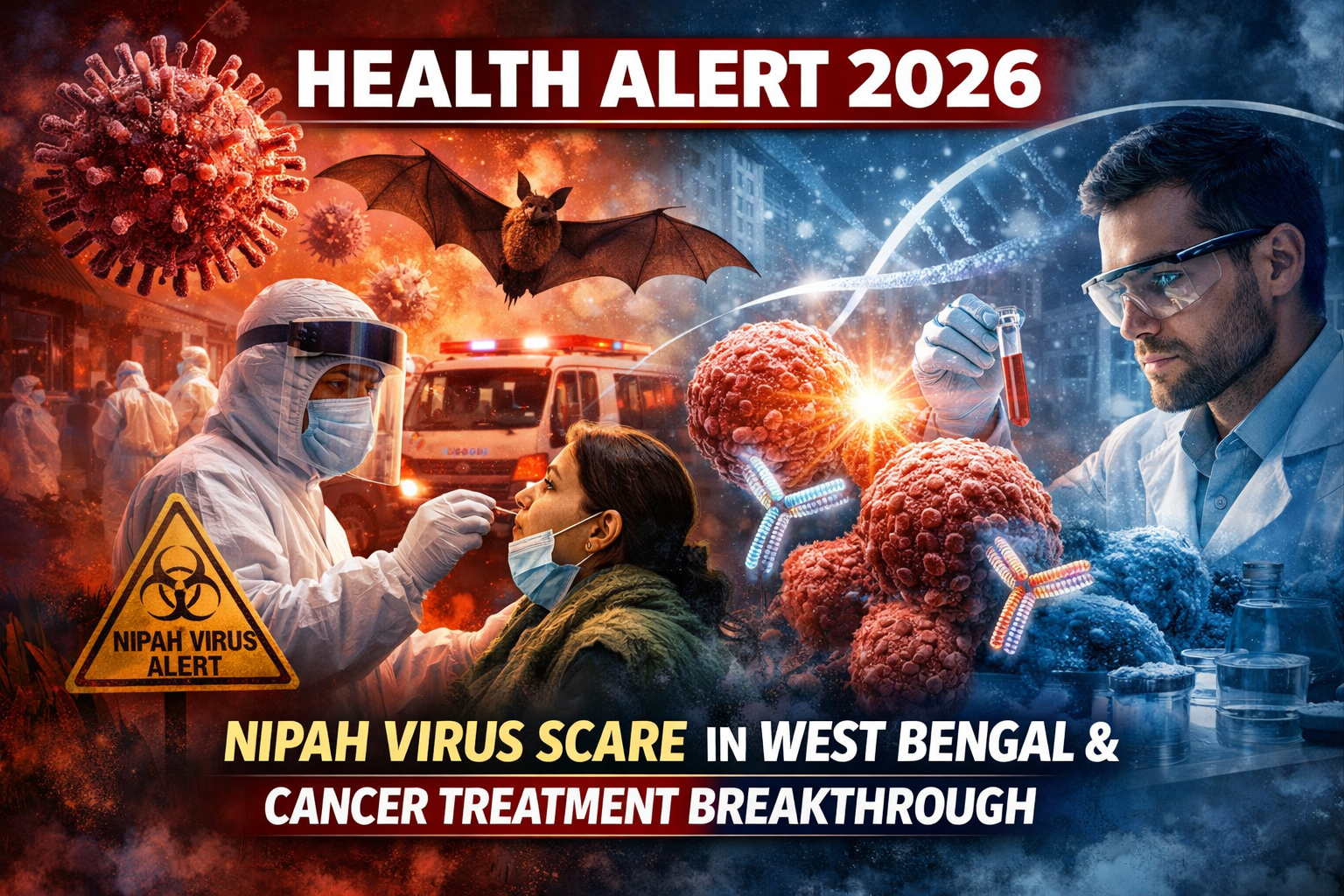
West Bengal is currently on high alert as health authorities report a fresh scare linked to the deadly Nipah virus. At the same time, scientists across the globe have announced a promising breakthrough in cancer treatment, offering hope to millions of patients. These two major developments highlight both the challenges and progress in global healthcare in 2026.
Nipah Virus Cases Raise Concern in West Bengal
Health officials in West Bengal have confirmed suspected cases of Nipah virus infection in the districts of North 24 Parganas and Nadia. The state government has immediately activated emergency response teams, increased hospital preparedness, and launched contact tracing efforts to prevent further spread.
The Nipah virus, known for its high fatality rate, is transmitted from animals to humans and can also spread through close human contact. Symptoms include fever, headache, breathing difficulties, and in severe cases, encephalitis (brain inflammation).
Authorities have urged citizens to:
- Avoid consuming fruits partially eaten by animals
- Maintain proper hygiene
- Report symptoms immediately to nearby health centers
The Union Health Ministry has also sent a special medical task force to assist the state administration.
Dr. Anirban Mukherjee, a senior virologist at Kolkata Medical College, said,
“Early detection and isolation are crucial. The public should not panic but remain cautious.”
Global Breakthrough in Cancer Treatment Brings New Hope
While the Nipah scare has raised alarm, a positive development has emerged from the medical research community. Scientists from an international research consortium have announced a groundbreaking cancer therapy based on advanced immunotherapy and AI-driven drug targeting.
The new treatment focuses on training the body’s immune system to identify and destroy cancer cells more effectively, with fewer side effects than traditional chemotherapy.
Key highlights of the breakthrough include:
- Over 80% success rate in early clinical trials
- Reduced recovery time for patients
- Lower damage to healthy cells
According to Dr. Maria Lopez, lead researcher of the project,
“This therapy could revolutionize cancer treatment in the coming decade and significantly improve survival rates.”
Experts believe this innovation may soon be available for major cancers such as lung, breast, and blood cancer after further testing.
A Year of Challenges and Progress in Healthcare
The dual developments reflect the evolving nature of global health. On one hand, infectious diseases like Nipah continue to pose serious threats, especially in densely populated regions. On the other hand, medical science is advancing rapidly, bringing new hope for life-threatening illnesses such as cancer.
Public health experts emphasize the importance of strong healthcare infrastructure, quick response systems, and continued investment in medical research.
Conclusion
As West Bengal battles the Nipah virus scare, authorities remain focused on containment and public safety. Meanwhile, the promising breakthrough in cancer treatment marks a major milestone in modern medicine.
The year 2026 stands as a reminder that while health risks persist, human innovation continues to push boundaries toward a healthier future.
Leave a Reply