Category: World

  • Tony de Zorzi Steadies South Africa in Second ODI Against Australia

    Tony de Zorzi Steadies South Africa in Second ODI Against Australia

    BTN24 News Desk | August 22, 2025 | Mackay, Australia

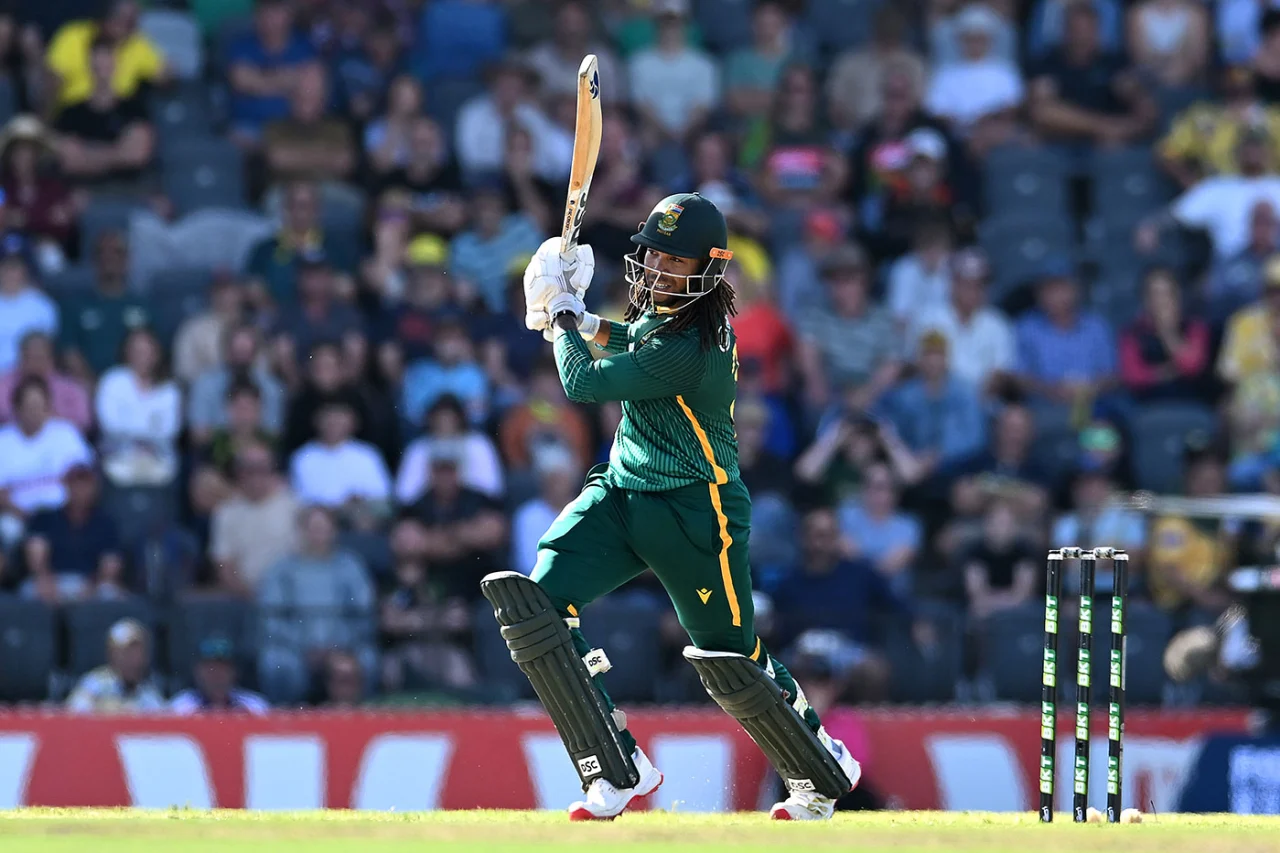
    South Africa’s rising batting talent Tony de Zorzi once again demonstrated his maturity at the international level with a steady 38-run knock in the second One Day International (ODI) against Australia at the Great Barrier Reef Arena in Mackay. While the innings was not a match-defining hundred, it provided much-needed stability to South Africa’s innings after an early collapse and reinforced his growing reputation as one of the team’s most dependable top-order batsmen.


    Toss and Team Selections

    South African captain Aiden Markram, standing in for Temba Bavuma who was rested as part of workload management, won the toss and opted to bat first on what looked like a tricky two-paced surface. The decision reflected South Africa’s broader strategy of rotating senior players and testing their bench strength in this series. Along with de Zorzi, Senuran Muthusamy was also drafted into the playing XI, highlighting the management’s commitment to giving opportunities to younger talents.

    Australia, meanwhile, came into the contest determined to level the series after their loss in the opening ODI. They fielded a strong side, including Josh Hazlewood, leg-spinner Adam Zampa, and debutant pacer Xavier Bartlett, who was given the responsibility of making early inroads on home soil.


    Early Setback and De Zorzi’s Composure

    South Africa endured a nightmare start when Xavier Bartlett, playing his debut ODI, dismissed stand-in skipper Aiden Markram for a duck with the scoreboard reading just two runs. With the visitors under pressure, all eyes turned to Tony de Zorzi, who walked in with the responsibility of rebuilding the innings.

    De Zorzi initially played cautiously, ensuring that no further wickets fell during the opening spell. He gradually found rhythm, unfurling elegant drives through the off-side and punching deliveries through the gaps. His ability to counter pace with a straight bat and adjust quickly to Bartlett’s bounce was particularly impressive. Together with Matthew Breetzke, he steadied the innings and began to shift momentum back in South Africa’s favor.


    Zampa Strikes, but Partnership Holds

    De Zorzi looked set for a bigger score when Adam Zampa intervened. The leg-spinner, known for breaking partnerships, outfoxed the left-hander with flight and subtle turn. De Zorzi miscued a shot and was caught and bowled for 38 runs off 39 deliveries, including five crisply struck fours. His dismissal, just before the drinks break, ended a promising partnership but left South Africa in a more stable position than when he had arrived at the crease.

    Though the innings did not culminate in a half-century, its value was significant. De Zorzi’s time at the crease blunted Australia’s new-ball attack, allowed Breetzke to settle, and prevented the Proteas from slipping into deeper trouble.


    Breetzke and Stubbs Take Charge

    With de Zorzi back in the pavilion, Matthew Breetzke shouldered the responsibility of anchoring the innings. Displaying maturity and confidence, he reached his fourth consecutive ODI half-century, a testament to his excellent run of form. His ability to rotate the strike and punish short deliveries provided South Africa with momentum during the middle overs.

    Tristan Stubbs provided the fireworks, smashing a towering six that drew loud cheers from the packed Mackay crowd. Their partnership ensured that South Africa maintained a healthy run rate despite losing their in-form opener.


    Australian Bowlers Maintain Pressure

    Australia’s bowlers, however, refused to let the game slip away. Josh Hazlewood maintained his trademark discipline with the new ball, Xavier Bartlett continued to impress with bounce and movement on debut, while Adam Zampa was once again the standout. His control and variations in the middle overs troubled the Proteas and brought the home side crucial breakthroughs. Part-timer Travis Head also chipped in with economical overs, slowing down the scoring rate.


    Series Context

    This three-match ODI series (August 19–24, 2025) holds significant importance for both teams as they prepare for the next ODI World Cup cycle. South Africa’s strategy of resting Bavuma and giving opportunities to de Zorzi and Muthusamy illustrates their long-term planning to build depth in the squad. For Australia, the focus remains on regaining confidence after inconsistent performances in the past year.


    Tony de Zorzi: Player Profile

    • Full Name: Tony de Zorzi
    • Date of Birth: August 28, 1997 (Pretoria, South Africa)
    • Batting Style: Left-hand bat
    • International Debut: Test debut vs West Indies (February 2023), ODI debut vs West Indies (March 2023)
    • ODI Career (up to 2nd ODI vs Australia, 2025):
      • Matches: 14
      • Runs: 482
      • Average: 37.07
      • Strike Rate: 95.82
      • 100s/50s: 1/3
      • Highest Score: 119* (vs India, his maiden century)

    His unbeaten 119 against India remains the high point of his ODI career, but his 38 in Mackay, though modest, carried equal importance because of the match situation.


    Conclusion

    Tony de Zorzi’s 38-run contribution may not dominate headlines, but it symbolized his growing maturity as a player capable of absorbing pressure and providing stability. Alongside Breetzke’s half-century and Stubbs’ aggressive cameo, his innings helped South Africa build a competitive foundation on a challenging surface.

    For the Proteas, this match was not just about runs or wickets—it was about resilience, depth, and belief. And in Tony de Zorzi, South Africa may have found a reliable top-order pillar for the future.
  • India–China Relations: A Fragile Reset with Human Hopes and Lingering Anxieties

    India–China Relations: A Fragile Reset with Human Hopes and Lingering Anxieties

    New Delhi/Beijing, August 21, 2025 – After years of hostility and silence, India and China — two neighbors who share not just borders but also centuries of history — are quietly attempting to mend broken ties. From restoring flights to reviving cultural exchanges, recent steps mark what some call the “fragile reset.” But beyond the numbers and policy briefings, ordinary people on both sides are watching closely, wondering: Will this time be different?


    Years of Distrust

    Since the Galwan Valley clash of 2020, where 20 Indian soldiers and four Chinese troops lost their lives, the relationship spiraled downward. Military standoffs, suspended trade agreements, blocked visas, and even cancelled student exchanges froze what was once a steadily growing partnership.

    Border villagers in Ladakh still recall those nights when the mountains echoed with tension. “Hum sirf shanti chahte hain,” said Dorje, a farmer in Leh. “Politics alag hai, par hamari zindagi sirf aman par tikki hai.” (We only want peace. Politics is separate, but our lives depend on peace.)


    A New, Cautious Beginning

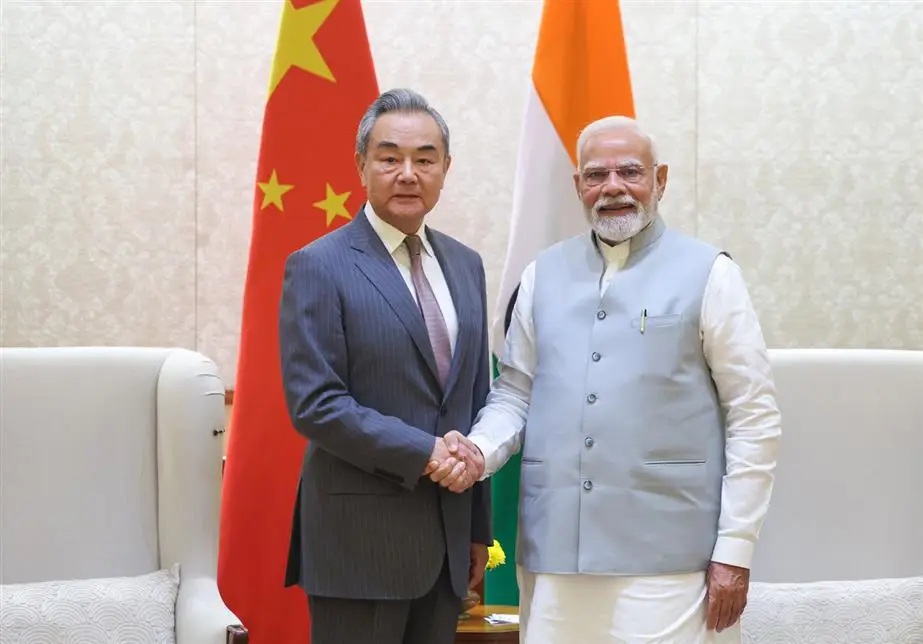
    This week, Chinese Foreign Minister Wang Yi’s visit to New Delhi signaled a thaw. After hours of talks, both sides agreed to:

    • Resume flights suspended since the pandemic.
    • Reinstate journalist visas, allowing reporters back into each other’s countries.
    • Reopen cultural and student exchanges — a huge relief for thousands of Indian students who had been stuck midway through degrees in China.
    • Restart military-to-military talks on stabilizing border patrols.

    “It’s not friendship yet, but at least it’s communication,” said an Indian diplomat off record.


    Global Pressures Driving Diplomacy

    What triggered this shift? Part of the answer lies thousands of miles away in Washington. The U.S. decision to push tariffs up to 50% on imports has rattled both Beijing and New Delhi.

    • China, already locked in a trade war with the U.S., cannot afford more isolation.
    • India, facing one of Asia’s sharpest earnings downgrades, knows instability with China will only deepen its economic vulnerability.

    As one Mumbai-based trader put it: “Politics thodi der ke liye side rakho. Business ruk gaya to rozgaar khatam ho jaayega.” (Forget politics for a moment — if business stops, jobs will disappear.)


    Flashpoint: The River that Connects Lives

    But mistrust runs deep. China’s plan to build a mega-dam on the Yarlung Tsangpo River in Tibet — which becomes the Brahmaputra in India — has triggered alarm.

    In Assam, fisherman Abdul Rahman looks at the river every morning with worry. “Yeh nadi hamari rozi hai. Agar paani ka flow badal gaya toh hum kya karenge?” (This river is our livelihood. If the water flow changes, what will we do?)

    Environmentalists fear flooding, displacement, and ecological disruption. For many in India’s Northeast, the dam isn’t just geopolitics — it’s survival.


    The Economic Ties That Bind

    Despite tensions, trade between the two countries hit $136 billion in 2024, with India importing crucial goods — from pharma ingredients to electronics — from China. But the imbalance is stark: India’s deficit crossed $100 billion.

    Still, business owners see opportunity in reopening channels. A textile exporter in Tiruppur said: “Ek baar flight aur cargo normal ho jaye, humare orders revive ho jaayenge. Workers ko kaam milega. Simple.”


    The Strategic Chessboard

    Globally, India has tilted closer to the U.S. and the Quad alliance (Japan, Australia, U.S.), while China has tightened its Russia ties. Both remain rivals in South Asia, Africa, and the Indian Ocean.

    Yet, neither wants open conflict. Instead, they are finding small spaces for cooperation — in BRICS, climate talks, and trade forums. For now, pragmatism is winning over pride.


    The Human Cost of Silence

    Perhaps the clearest sign of the thaw is visible among students. Over 23,000 Indian students, mostly in medicine, were stranded when China closed borders after 2020.

    Rohit Sharma, a 23-year-old from Patna, had to put his MBBS dream on hold. “Main roz news check karta hoon,” he said. “Agar visa khul gaya toh meri zindagi track par aa jaayegi.” (I check the news daily. If visas reopen, my life will get back on track.)

    Families divided by business, education, and cultural ties are also waiting. As one Delhi-based parent put it: “Hamare bacche ka future diplomacy par atka hai.” (Our children’s future is stuck in diplomacy.)


    A Fragile Reset

    Experts caution against over-optimism. Border disputes remain unresolved, mistrust lingers, and both governments continue to jostle for influence in Asia.

    Still, even a limited reset matters. “This is not reconciliation,” said a Delhi-based analyst. “It’s a pause, born out of necessity. But even pauses matter — they give space for people to breathe.”

    For millions on both sides, the hope is simple: fewer confrontations, more conversations.


    Conclusion

    India and China’s reset is not a grand friendship — it’s a delicate balancing act shaped by economics, global politics, and human need. The next few months will reveal whether this fragile peace holds or collapses back into suspicion.

    But for villagers along the border, for students stuck mid-degree, and for traders waiting for goods to move again, even this fragile thaw feels like a breath of fresh air.


  • U.S. Conducts Targeted Airstrikes on Iran’s Nuclear Facilities

    U.S. Conducts Targeted Airstrikes on Iran’s Nuclear Facilities

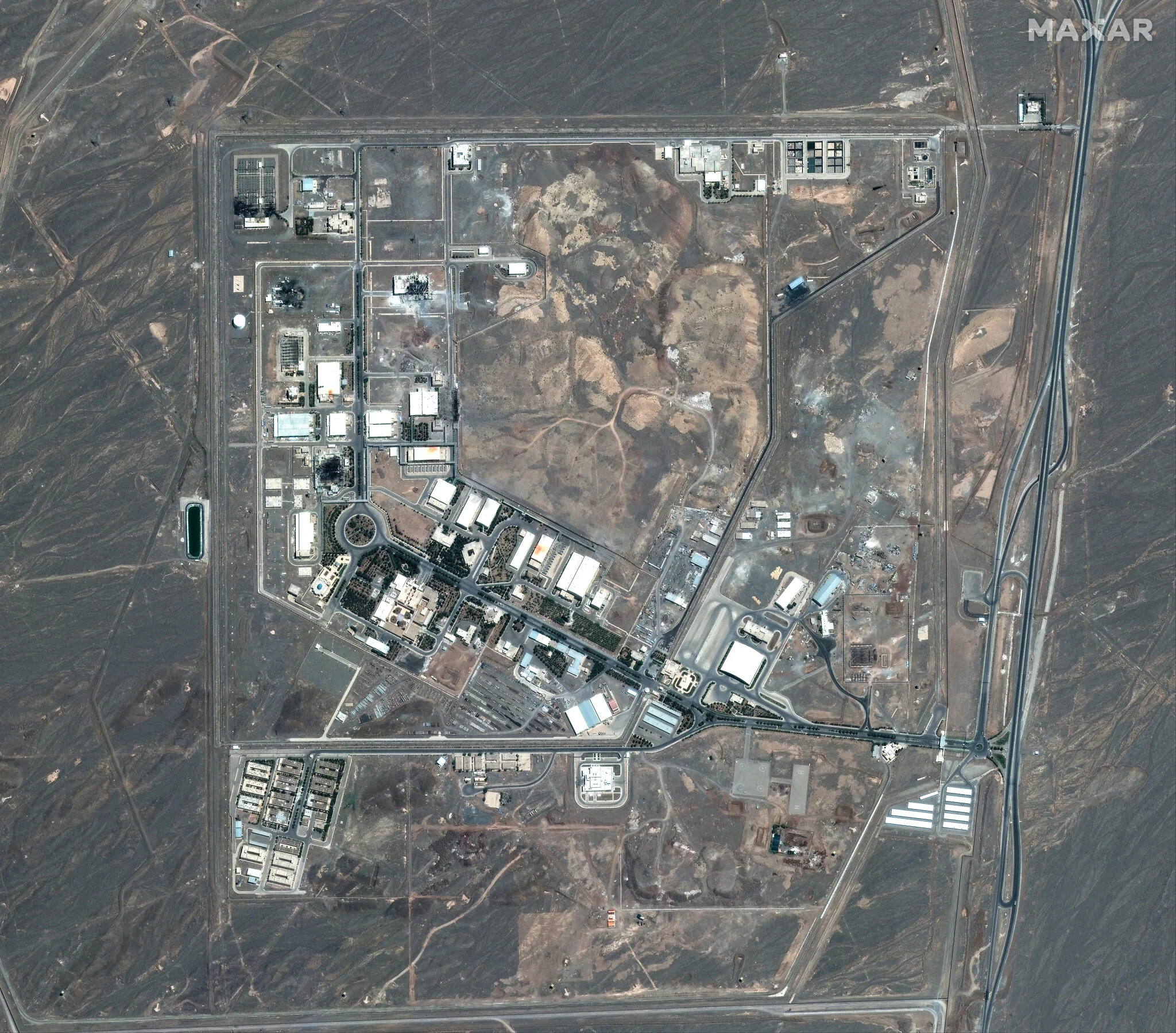
    “Image: Natanz nuclear facility satellite view © Hamed Saber (Flickr/CC‑BY‑2.0)[Maxar Technologies]

    Date: June 22, 2025

    Washington/Tehran —

    In a significant escalation of tensions in the Middle East, the United States has carried out targeted airstrikes on three of Iran’s key nuclear facilities, marking one of the most direct military actions in recent years.

    According to defense officials, precision strikes were launched late Saturday on the Fordow Fuel Enrichment Plant, the Natanz Nuclear Facility, and the Isfahan Research Center. The operation was executed using B‑2 Spirit stealth bombers and Tomahawk cruise missiles launched from U.S. naval forces in the region.


    🔴 U.S. Statement

    Former U.S. President Donald Trump, who ordered the strike, confirmed in a televised address:

    “Iran’s nuclear sites have been completely and totally obliterated. This is a clear message — the world will not tolerate nuclear blackmail.”

    The Pentagon described the strikes as “surgical and strategic,” aiming to dismantle Iran’s uranium enrichment capabilities without triggering civilian casualties.


    📍 Targeted Sites

    1. Fordow Facility (underground enrichment site): Severely damaged
    2. Natanz Facility (major enrichment hub): Surface infrastructure destroyed
    3. Isfahan Site (centrifuge development and research): Struck and disabled

    Satellite imagery shared by defense sources shows significant damage at all three locations.


    🌐 International Response

    • Israel hailed the operation as a “decisive move to protect global stability.”
    • The United Nations expressed “deep concern,” urging immediate diplomatic dialogue to prevent further escalation.
    • Russia, Turkey, and China strongly condemned the strikes, calling them unilateral and provocative.
    • Iran’s foreign ministry labeled the attack as an “act of war” and promised a “proportionate response.”

    ⚠️ Iran’s Retaliation and Regional Escalation

    Within hours of the U.S. assault, Iran launched missile and drone attacks targeting Israeli military installations, prompting countermeasures from the Israeli Defense Forces. Defense analysts fear this could trigger a broader regional conflict involving allied forces.

    Meanwhile, the U.S. military has redeployed B‑2 bombers to Guam, signaling preparations for potential follow-up operations.


    📉 Market Impact

    The geopolitical tension has caused immediate disruption in global markets:

    • Crude oil prices surged by over 12% amid fears of supply chain disruption.
    • Stock indices across Asia and Europe opened lower.
    • Gold and U.S. Treasury bonds saw increased demand as investors sought safer assets.

    🕊️ What Lies Ahead?

    Global leaders are now calling for urgent talks. A closed-door UN Security Council meeting is scheduled within the next 24 hours to address the unfolding crisis.

    Defense analysts caution that the next 48–72 hours will be critical in determining whether this remains a limited conflict or escalates into a broader military confrontation.


    📌 Key Highlights

    TopicDetails
    WhoU.S. Armed Forces, ordered by Donald Trump
    WhatAirstrikes on 3 Iranian nuclear sites
    WhereFordow, Natanz, and Isfahan (Iran)
    WhyTo prevent Iran’s nuclear advancement
    OutcomeHeavy damage to nuclear facilities, rising global tensions