Category: Education

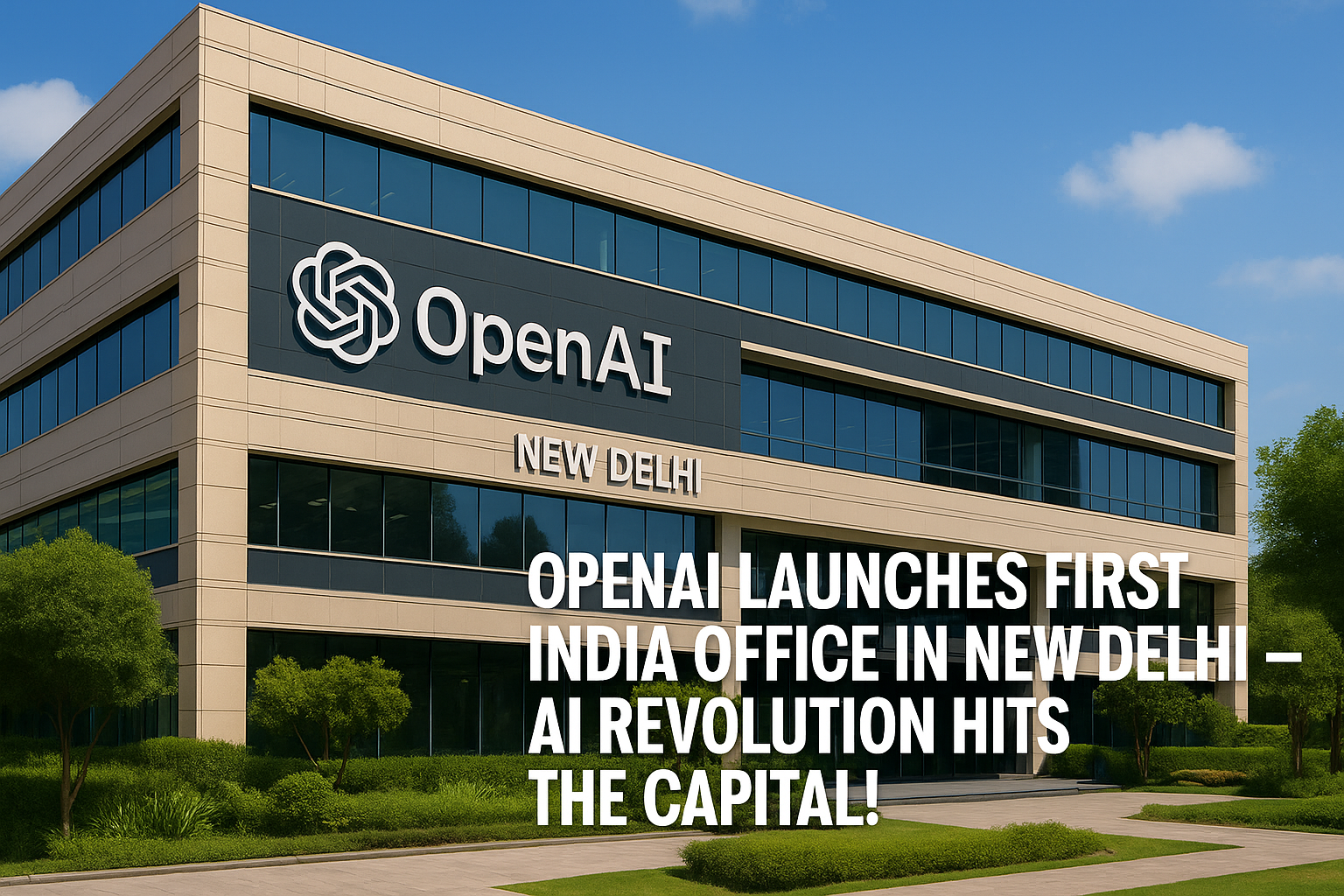
  • “OpenAI Launches First India Office in New Delhi – AI Revolution Hits the Capital!”

    “OpenAI Launches First India Office in New Delhi – AI Revolution Hits the Capital!”

    A Major Step Toward AI Growth in India

    OpenAI has officially announced plans to open its first office in New Delhi, India, marking a significant milestone in the company’s international expansion strategy. India, already among the fastest-growing markets for AI adoption, offers OpenAI a unique opportunity to collaborate with developers, businesses, and institutions. The office is expected to become operational by the end of 2025, with recruitment for local roles already underway.

    Why India?

    India has quickly risen to become OpenAI’s second-largest user base, fueled by the rapid adoption of AI tools across industries such as education, healthcare, finance, and startups. With millions of students and developers embracing AI, the company sees India as a natural choice for building deeper connections and creating localized solutions.

    Sam Altman’s Visit to India

    OpenAI CEO Sam Altman is scheduled to visit India in September 2025. His visit is aimed at strengthening partnerships with local stakeholders, meeting policymakers, and understanding the unique challenges and opportunities in India’s AI ecosystem. Altman’s presence highlights the importance OpenAI places on India as a future hub for AI innovation.

    Atlas Robot Learns from Humans

    Meanwhile, Boston Dynamics’ humanoid robot Atlas has made headlines by learning new skills through a human-watching AI model. By observing human activities and processing them through a language-conditioned AI system, Atlas has demonstrated the ability to tie ropes, spread tablecloths, and even handle heavy objects like car tires. This breakthrough suggests a future where robots could learn complex tasks in the same way humans do, greatly expanding their usefulness

    in industries and daily life.

    Oracle’s Larry Ellison Becomes the World’s Second-Richest Man

    On the corporate front, Larry Ellison, founder of Oracle, has now become the second-richest man in the world, surpassing Jeff Bezos and Mark Zuckerberg. His wealth, estimated at around $288 billion, comes largely from Oracle’s success in cloud computing—a technology Ellison once mocked as “complete gibberish.” The shift reflects how cloud adoption has transformed Oracle into a major force, with Ellison benefiting from the surge in demand for cloud infrastructure.

    Foxconn’s Strategic Moves Affect Apple’s India Push

    Apple’s manufacturing partner Foxconn has recalled over 300 Chinese engineers from India, a move believed to be influenced by restrictions on transferring sensitive technology from China. While Apple continues to expand its manufacturing presence in India, this recall raises questions about supply chain stability and the challenges of balancing global production amid political and trade tensions.

    The Future of AI in Education

    The role of AI in education is also coming under the spotlight. WIRED is set to host an event titled “Back to School in the Age of AI” on August 28, 2025. The event will explore how artificial intelligence is reshaping classrooms, the rise of microschools funded by tech leaders, new ed-tech innovations, and the evolving role of teachers in an AI-driven environment. With AI tools already assisting students in learning and teachers in lesson planning, the education sector is expected to undergo a rapid transformation in the coming years.

    Tax Technology Gets Smarter

    In the fintech world, Avalara has launched a new “software-with-a-service” platform for property tax compliance. Meanwhile, BillingPlatform has rolled out an AI-powered RevenueIQ suite designed to improve revenue management. These moves highlight how AI is being integrated into tax and financial systems to improve accuracy, efficiency, and compliance.

    The Larger Picture: AI Everywhere

    From robotics and education to finance and cloud computing, AI continues to reshape the global landscape. Companies are restructuring their business models, governments are introducing new regulations, and industries are rapidly transforming. What once seemed futuristic is now becoming part of everyday reality, with AI influencing not just productivity but also jobs, ethics, and global economics.

    Looking Ahead

    The opening of OpenAI’s office in New Delhi is more than just a corporate expansion—it’s a statement about the role India is set to play in the AI revolution. With a huge pool of talent, a thriving startup ecosystem, and growing government support for technology, India is on track to become one of the world’s most important centers for AI development. For businesses, students, and policymakers alike, the coming years promise to be transformative as artificial intelligence moves from experimental labs into the mainstream of society.


  • Online Gaming Bill Passed Without Debate: What It Means for India

    Online Gaming Bill Passed Without Debate: What It Means for India

    New Delhi | August 21, 2025 (BTN24) – In a move that has stunned both the gaming industry and political observers, the Lok Sabha on August 20 passed the Promotion and Regulation of Online Gaming Bill, 2025, without any debate. The very next day, the Rajya Sabha also cleared the Bill amid opposition protests, setting the stage for a sweeping overhaul of India’s online gaming landscape. The legislation now awaits presidential assent, which is widely expected in the coming days.

    What the Bill Does

    The new law bans all real-money online games, including fantasy sports platforms, poker, rummy, betting, and other stake-based apps. Popular services such as Dream11, MPL, PokerBaazi, Zupee, My11Circle, WinZo, and RummyCircle are among those directly affected.

    The Bill not only prohibits playing such games but also imposes restrictions on advertisements, endorsements, and financial transactions linked to them. Banks, UPI apps, and payment processors will be barred from processing payments for these platforms.

    At the same time, the legislation draws a clear distinction: e-sports and educational/social gaming are exempted and will be actively promoted as safe forms of digital entertainment.

    To regulate this ecosystem, the Bill mandates the creation of a National Online Gaming Authority, which will classify games, grant approvals, handle complaints, and block illegal platforms.

    Penalties and Enforcement

    The Bill prescribes strict punishments to deter violations:

    • Running real-money platforms: Up to 3 years in jail and/or ₹1 crore fine.
    • Advertising such games: Up to 2 years in jail and/or ₹50 lakh fine.
    • Payment facilitation: Up to 3 years in jail and/or ₹1 crore fine.
    • Repeat offences: Up to 5 years in jail and fines up to ₹2 crore.

    Certain offences are classified as cognizable and non-bailable, giving authorities powers of warrantless search and seizure in serious cases.

    Government’s Justification

    Union Minister Ashwini Vaishnaw, who introduced the Bill, said the urgency was necessary because “online money gaming has become a bigger issue than drugs.” He highlighted cases of young Indians taking their own lives after incurring massive losses in online games, calling the legislation a much-needed safeguard for families and society.

    Industry Shock and Economic Fallout

    The decision has sent shockwaves through India’s booming online gaming sector, which was valued at over ₹31,000 crore annually and contributed more than ₹20,000 crore in taxes. Industry reports projected the sector to double by 2028, but the new law has thrown those forecasts into uncertainty.

    Companies backed by global investors—including Tiger Global and Peak XV—now face shutdown risks. Stock markets reacted sharply: Nazara Tech shares plunged over 21% in two days, while Delta Corp also recorded double-digit losses.

    For the thousands employed in the sector, the future now hangs in the balance.

    Opposition Voices Concern

    The Opposition strongly criticized the manner in which the Bill was passed.

    • Karti Chidambaram (Congress) called it a “knee-jerk reaction” and demanded referral to a parliamentary committee.
    • Shashi Tharoor argued that global models show regulation and taxation—not blanket bans—are more effective in tackling gaming addiction while preserving economic opportunity.

    Several industry bodies, including the Federation of Indian Fantasy Sports (FIFS) and the E-Gaming Federation, have warned that the ban could stifle innovation, drive users to unregulated offshore platforms, and cause heavy revenue loss for the government.

    A Turning Point for India’s Digital Future

    The passage of this Bill—amid one of Parliament’s stormiest sessions in recent memory—marks a defining moment for India’s digital economy. Supporters hail it as a necessary shield against addiction and fraud, while critics fear it could push a thriving industry underground.

    For millions of Indian gamers, parents, investors, and entrepreneurs, the coming months will reveal whether this bold legislative gamble proves to be a safeguard—or a setback—for India’s digital future.

  • Indian Markets Rally on Fed Rate Cut Hopes and Cooling Inflation

    Indian Markets Rally on Fed Rate Cut Hopes and Cooling Inflation

    Sensex jumps 304 points, Nifty crosses 24,600 as investor sentiment turns bullish

    New Delhi, August 14, 2025
    The Indian stock market ended Wednesday’s session on a strong note, propelled by optimism over potential U.S. Federal Reserve rate cuts and the sharp cooling of domestic retail inflation to an eight-year low. The rally was broad-based, with key indices hitting fresh highs, metal and auto stocks leading the charge, and investor wealth swelling by over ₹2 lakh crore in a single day.


    A Day of Strong Gains

    The BSE Sensex surged 304 points, or 0.40%, to close at 81,157.32, while the NSE Nifty 50 climbed 131.95 points (0.54%) to settle at 24,610.15. Both indices opened in the green, sustained momentum throughout the day, and closed near their intraday highs.

    Market breadth favored the bulls — 1,890 shares advanced, 1,420 declined, and 102 remained unchanged on the Bombay Stock Exchange. The Nifty Midcap 150 and Nifty Smallcap 250 outperformed the benchmarks, closing 0.5% and 0.6% higher respectively, underscoring the strength in broader markets.


    Why the Markets are Rising

    1. Cooling U.S. Inflation

    July’s U.S. retail inflation data came in lower than expected, sparking hopes that the Federal Reserve could cut interest rates as early as September. The softer inflation figure eased concerns about prolonged monetary tightening, leading to a global rally that spilled over into Indian equities.

    2. Domestic CPI at 8-Year Low

    Closer to home, India’s Consumer Price Index (CPI) inflation cooled to 1.55% in July, its lowest since 2017, comfortably within the Reserve Bank of India’s target band of 2–6%. Economists believe this could give the RBI additional room to maintain a supportive monetary stance, further bolstering market sentiment.

    3. Strong Sectoral Performance

    • Metals: Riding on higher commodity prices and expectations of renewed infrastructure demand.
    • Auto: Benefiting from steady retail sales and easing input costs.
    • Healthcare & Pharma: Gaining on defensive buying and export optimism.
    • Financials: Supported by healthy quarterly earnings and lower credit cost forecasts.

    Top Gainers and Losers

    Among the Nifty 50 constituents:

    • Top gainers: Tata Steel (+3.2%), JSW Steel (+2.9%), Bajaj Auto (+2.4%), Sun Pharma (+2.3%), and ICICI Bank (+2.1%).
    • Top losers: Tech Mahindra (-1.2%), Infosys (-0.9%), and HCL Tech (-0.7%), as IT stocks saw mild profit-taking following recent gains.

    Investor Wealth Swells

    The sharp rally added an estimated ₹2.05 lakh crore to investor wealth in a single day, with the BSE market capitalization crossing the ₹460 lakh crore mark. Analysts say the market is benefitting from a “Goldilocks” macroeconomic environment — moderate inflation, robust corporate earnings, and supportive global cues.


    SEBI’s Regulatory Push

    On the regulatory front, the Securities and Exchange Board of India (SEBI) proposed new guidelines to formally integrate algorithmic and proprietary trading within stockbroker regulations. The move aims to enhance transparency, curb potential misuse of high-frequency trades, and strengthen oversight. Public feedback on the draft framework has been invited until September 3, 2025.


    Global Market Influence

    Indian equities tracked gains across Asia, where markets rallied on the back of dovish central bank expectations.

    • Japan’s Nikkei 225 climbed 0.6%
    • Hong Kong’s Hang Seng advanced 1.2%
    • China’s Shanghai Composite rose 0.5%

    In the U.S., futures pointed to a higher open for Wall Street indices, with traders pricing in a 70% probability of a Fed rate cut next month.


    Expert Views

    Radhika Shah, Senior Analyst at Axis Securities, told btn24:

    “Cooling inflation both in India and the U.S. has come as a double dose of positive news. This environment could support further gains in Indian equities, but investors should remain cautious of global geopolitical developments that could trigger volatility.”

    Amitabh Sinha, Head of Research at Capital Edge, added:

    “While today’s rally is encouraging, the market has run up considerably. We expect some profit-booking at higher levels, but the medium-term outlook remains bullish as long as macro indicators stay supportive.”


    What This Means for Investors

    For retail investors, the current rally offers opportunities but also warrants discipline:

    • Avoid chasing stocks that have already surged sharply in recent sessions.
    • Focus on sectors with strong earnings visibility such as banking, autos, and select metals.
    • Maintain a diversified portfolio to manage risk.

    Outlook for the Coming Weeks

    Market watchers expect the Nifty to test 24,800–25,000 levels in the short term if global cues remain favorable. Any sharp reversal in U.S. interest rate expectations or a spike in crude oil prices could, however, dampen the bullish momentum.


    Bottom Line:
    The Indian stock market’s rally on August 13, 2025, reflects a rare alignment of domestic and global positives. With inflation cooling and hopes of a U.S. rate cut rising, investors are riding a wave of optimism — one that could carry equities to new record highs in the weeks ahead.

  • Aadhaar 2025: 15 Crucial Updates Every Indian Must Know — BTN24 Exclusive

    Aadhaar 2025: 15 Crucial Updates Every Indian Must Know — BTN24 Exclusive

    By BTN24 Digital Desk | Updated July 2025
    India


    “Aadhaar is more than just an ID — it’s your financial, legal, and digital identity in India. Staying updated isn’t a choice anymore — it’s your responsibility.”


    Why You Should Read This

    As we move deeper into a digital-first India, the Aadhaar card has become the foundation for accessing almost every public and private service — from banking and taxation to pension, subsidy, SIM activation, and education.

    Yet, millions of people across India are unaware of how to secure, update, and use their Aadhaar correctly, especially with the new changes announced for 2025.

    At BTN24, we believe information is empowerment. So here’s our verified list of the top 15 Aadhaar updates and facts every Indian must know — because ignoring them could cost you money, access, and identity protection.


    BTN24 Deep Dive: 15 Must-Know Aadhaar Facts for 2025


    1. Aadhaar Is Not Proof of Citizenship

    Aadhaar is issued to residents of India, not necessarily citizens. It verifies identity and address, but cannot be used to prove nationality under any legal framework.


    2. Aadhaar Updates Are Free Till Sept 14, 2025

    UIDAI has extended free online Aadhaar update services. If you need to change your name, address, or birth date, visit myaadhaar.uidai.gov.in and complete the update using OTP-based login.


    3. Biometric Update is Mandatory at Age 5 and 15

    Children who enrolled for Aadhaar before age 5 or 15 must update their biometric data (fingerprints, iris scan, and photo) once they cross those age milestones. Failure to do so may lead to Aadhaar becoming inactive for official use.


    4. Always Use Masked Aadhaar When Sharing

    To reduce the risk of identity theft, download and use the Masked Aadhaar. It only displays the last 4 digits of your Aadhaar number, keeping the rest private.


    5. Link Aadhaar with PAN, Bank, and UPI

    This is crucial. If your Aadhaar is not linked with your PAN card, bank accounts, and UPI apps, your financial services may get temporarily blocked or rejected during KYC checks.


    6. Aadhaar Is Voluntary for Private Services

    As per the Supreme Court of India, private entities (schools, mobile operators, companies) cannot force Aadhaar as a condition for service. Aadhaar is optional, not mandatory, unless specifically required by law.


    7. Lost Aadhaar? Order a PVC Card for ₹50

    UIDAI allows you to order an official, waterproof, secure PVC Aadhaar Card for just ₹50. It includes a hologram, secure QR code, and micro text — better than paper prints or photocopies.


    8. Aadhaar Seeding is Mandatory for Pensioners

    Retired individuals must ensure that their Aadhaar is linked with the Pension Payment Order (PPO) and bank account to avoid delay or rejection in monthly disbursals.


    9. You Can View Aadhaar Authentication History

    Anyone can check when and where their Aadhaar was used for verification via the UIDAI portal. This helps detect unauthorized use and improve digital safety.


    10. Use Virtual ID (VID) Instead of Aadhaar Number

    You can generate a Virtual ID, a temporary 16-digit number that works like Aadhaar during eKYC. It allows authentication without revealing your actual Aadhaar number — safer for digital transactions.


    11. Blue Aadhaar for Children Below 5

    Children below the age of 5 receive a Blue Aadhaar, which doesn’t require biometrics. However, biometric updates are mandatory at ages 5 and 15.


    12. New Aadhaar PVC Cards are Smarter and Safer

    The upgraded PVC cards now include security features like ghost image, hologram, micro text, and UV printing, making them tamper-proof and more durable than standard printouts.


    13. Use DigiLocker to Store Aadhaar Securely

    Instead of emailing or uploading your Aadhaar copy, link it with DigiLocker, the official cloud storage app by the Government of India. It ensures Aadhaar is accessible, digitally signed, and encrypted.


    14. Avoid Middlemen – Use UIDAI Official Portals

    Most Aadhaar updates and reprints are either free or cost ₹50. Avoid unauthorized agents who often charge ₹100–300 for the same services. Always use uidai.gov.in.


    15. Misuse of Aadhaar is a Punishable Offense

    Aadhaar fraud, impersonation, or unauthorized sharing of Aadhaar numbers is a legal offense under the Aadhaar Act, 2016. The penalty can include fines and imprisonment.


    BTN24 Recommends – Safety Tips

    1. Use Masked Aadhaar or VID when possible
    2. Never share OTPs linked to Aadhaar with anyone
    3. Avoid uploading Aadhaar to WhatsApp, Drive, or email
    4. Check Aadhaar usage logs monthly
    5. Rely on official UIDAI channels only


    Final Words from BTN24

    Aadhaar is no longer a basic document — it’s your entry point into India’s digital economy. Used right, it simplifies your life. Used wrong, it can complicate everything from banking to benefits to legal identity.

    Stay informed. Stay secure.
    Share this article with your family, especially senior citizens, students, and digital first-timers.

    For more verified updates, stay tuned with BTN24 – India’s voice in the digital age.

  • 💰 RBI Announces ₹1 Lakh Crore Reverse Repo Auction to Absorb Surplus Liquidity

    💰 RBI Announces ₹1 Lakh Crore Reverse Repo Auction to Absorb Surplus Liquidity

    Image credit: Nikola Tomašić / Unsplash

    In a calibrated step to manage surplus liquidity in the financial system, the Reserve Bank of India (RBI) has announced a ₹1 lakh crore seven-day variable rate reverse repo (VRRR) auction, scheduled for Friday, July 4.

    The decision comes as surplus liquidity in the banking sector touched approximately ₹3.75 lakh crore on July 2, prompting the central bank to act swiftly to bring short-term interest rates closer to the policy repo rate of 5.5%.

    “On a review of the current and evolving liquidity conditions, it has been decided to conduct a Variable Rate Reverse Repo auction on July 4,” the RBI said in its official communication.

    The RBI also cancelled a previously planned 14-day VRRR operation, replacing it with this shorter-term measure to better align with its liquidity management strategy.

    🔍 Why It Matters:

    • The reverse repo auction enables banks to temporarily park their excess funds with the RBI, helping drain out surplus money from the system.
    • It is a critical tool to control volatility in overnight rates like the call money rate and MIBOR.
    • The move indicates the RBI’s intent to maintain financial stability without altering its policy stance.

    Market participants view the central bank’s action as a sign of its proactive approach in fine-tuning monetary operations while keeping inflation risks and interest rate alignment in check.

    This marks the first major liquidity absorption move of this scale since November 2024, reinforcing the RBI’s focus on orderly money market functioning.