Author: Shivansh Mehra

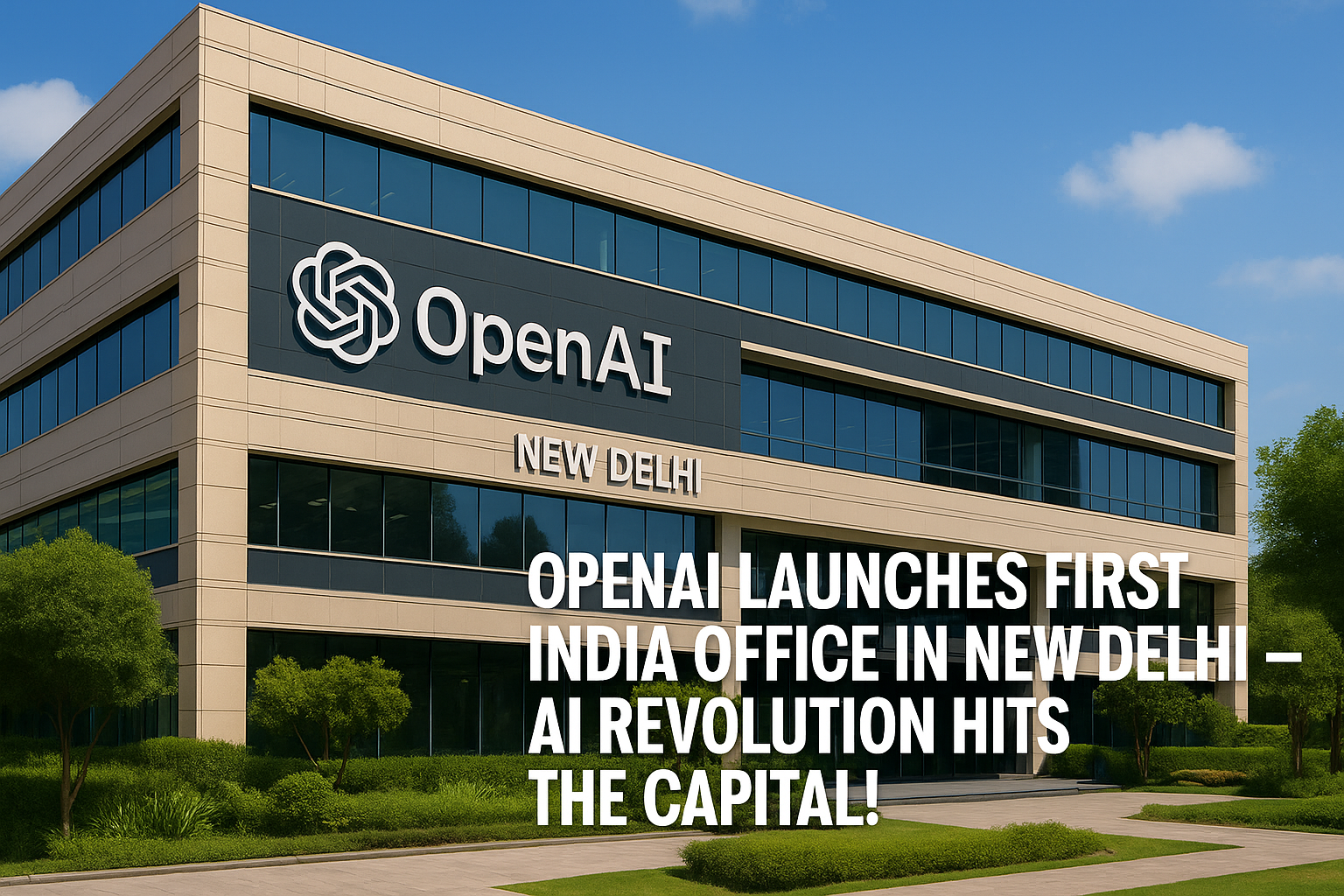
  • “OpenAI Launches First India Office in New Delhi – AI Revolution Hits the Capital!”

    “OpenAI Launches First India Office in New Delhi – AI Revolution Hits the Capital!”

    A Major Step Toward AI Growth in India

    OpenAI has officially announced plans to open its first office in New Delhi, India, marking a significant milestone in the company’s international expansion strategy. India, already among the fastest-growing markets for AI adoption, offers OpenAI a unique opportunity to collaborate with developers, businesses, and institutions. The office is expected to become operational by the end of 2025, with recruitment for local roles already underway.

    Why India?

    India has quickly risen to become OpenAI’s second-largest user base, fueled by the rapid adoption of AI tools across industries such as education, healthcare, finance, and startups. With millions of students and developers embracing AI, the company sees India as a natural choice for building deeper connections and creating localized solutions.

    Sam Altman’s Visit to India

    OpenAI CEO Sam Altman is scheduled to visit India in September 2025. His visit is aimed at strengthening partnerships with local stakeholders, meeting policymakers, and understanding the unique challenges and opportunities in India’s AI ecosystem. Altman’s presence highlights the importance OpenAI places on India as a future hub for AI innovation.

    Atlas Robot Learns from Humans

    Meanwhile, Boston Dynamics’ humanoid robot Atlas has made headlines by learning new skills through a human-watching AI model. By observing human activities and processing them through a language-conditioned AI system, Atlas has demonstrated the ability to tie ropes, spread tablecloths, and even handle heavy objects like car tires. This breakthrough suggests a future where robots could learn complex tasks in the same way humans do, greatly expanding their usefulness

    in industries and daily life.

    Oracle’s Larry Ellison Becomes the World’s Second-Richest Man

    On the corporate front, Larry Ellison, founder of Oracle, has now become the second-richest man in the world, surpassing Jeff Bezos and Mark Zuckerberg. His wealth, estimated at around $288 billion, comes largely from Oracle’s success in cloud computing—a technology Ellison once mocked as “complete gibberish.” The shift reflects how cloud adoption has transformed Oracle into a major force, with Ellison benefiting from the surge in demand for cloud infrastructure.

    Foxconn’s Strategic Moves Affect Apple’s India Push

    Apple’s manufacturing partner Foxconn has recalled over 300 Chinese engineers from India, a move believed to be influenced by restrictions on transferring sensitive technology from China. While Apple continues to expand its manufacturing presence in India, this recall raises questions about supply chain stability and the challenges of balancing global production amid political and trade tensions.

    The Future of AI in Education

    The role of AI in education is also coming under the spotlight. WIRED is set to host an event titled “Back to School in the Age of AI” on August 28, 2025. The event will explore how artificial intelligence is reshaping classrooms, the rise of microschools funded by tech leaders, new ed-tech innovations, and the evolving role of teachers in an AI-driven environment. With AI tools already assisting students in learning and teachers in lesson planning, the education sector is expected to undergo a rapid transformation in the coming years.

    Tax Technology Gets Smarter

    In the fintech world, Avalara has launched a new “software-with-a-service” platform for property tax compliance. Meanwhile, BillingPlatform has rolled out an AI-powered RevenueIQ suite designed to improve revenue management. These moves highlight how AI is being integrated into tax and financial systems to improve accuracy, efficiency, and compliance.

    The Larger Picture: AI Everywhere

    From robotics and education to finance and cloud computing, AI continues to reshape the global landscape. Companies are restructuring their business models, governments are introducing new regulations, and industries are rapidly transforming. What once seemed futuristic is now becoming part of everyday reality, with AI influencing not just productivity but also jobs, ethics, and global economics.

    Looking Ahead

    The opening of OpenAI’s office in New Delhi is more than just a corporate expansion—it’s a statement about the role India is set to play in the AI revolution. With a huge pool of talent, a thriving startup ecosystem, and growing government support for technology, India is on track to become one of the world’s most important centers for AI development. For businesses, students, and policymakers alike, the coming years promise to be transformative as artificial intelligence moves from experimental labs into the mainstream of society.
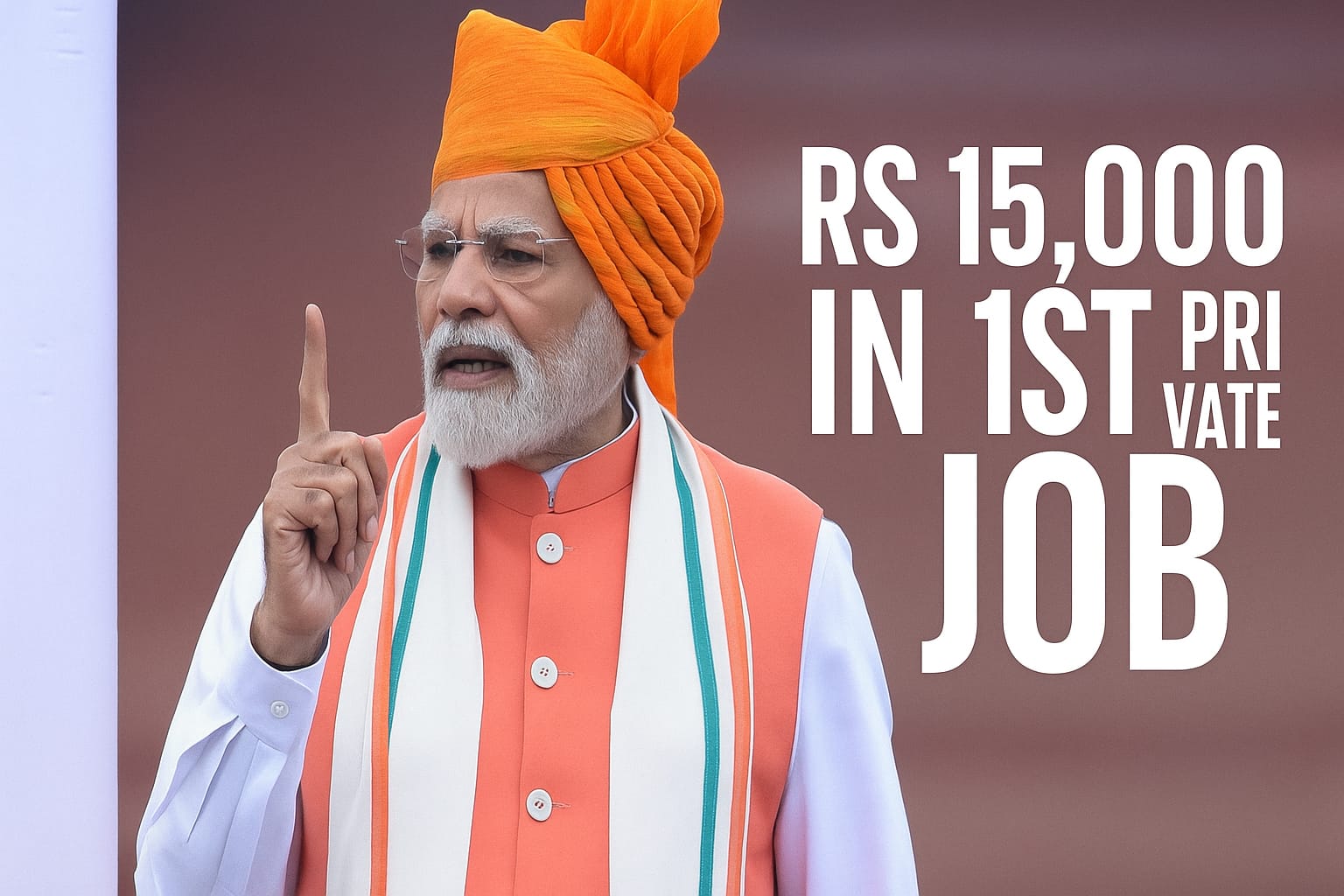
  • RS 15,000 in 1st private job! : PM Modi Announced Viksit Bharat Rozgar Yojana

    RS 15,000 in 1st private job! : PM Modi Announced Viksit Bharat Rozgar Yojana

    PM Modi Launches PM-VBRY: Historic Employment Initiative for Youth

    New Delhi, August 15, 2025 – On India’s 78th Independence Day, Prime Minister Narendra Modi announced the launch of the Pradhan Mantri Viksit Bharat Rozgar Yojana (PM-VBRY) from the Red Fort. With a total allocation of ₹99,446 crore, the scheme is aimed at tackling youth unemployment and providing financial incentives for first-time private sector employees. The ambitious program seeks to generate over 3.5 crore jobs within the next two years, marking one of the largest employment-focused initiatives in India’s recent history.

    Objectives and Vision

    The PM-VBRY is designed to provide young Indians with meaningful employment opportunities while encouraging a culture of financial literacy and savings. The scheme targets first-time private sector employees, ensuring that youth entering the workforce are financially supported and motivated to retain long-term employment.

    Prime Minister Modi emphasized that the scheme is part of a broader vision to make India a global employment hub, providing equitable opportunities for every young citizen. By offering incentives to both employees and employers, the government aims to stimulate economic growth, reduce unemployment rates, and strengthen the formal job sector across the country.

    Financial Incentives for Employees

    One of the key features of PM-VBRY is the financial support provided to first-time job seekers. Eligible employees will receive ₹15,000 in two installments:

    First Installment: ₹7,500 after six months of continuous employment.

    Second Installment: ₹7,500 after twelve months, upon completion of a financial literacy program.

    Additionally, a portion of the second installment will be deposited into a designated savings account, encouraging long-term savings habits. This structure ensures that employees benefit not only in the short term but also develop a foundation for financial security and responsible money management.

    Incentives for Employers

    PM-VBRY also focuses on motivating employers to hire and retain new employees. Companies that hire fresh talent will receive a monthly incentive of ₹3,000 per employee. For manufacturing companies, this benefit extends up to four years, compared to two years for other sectors.

    By offering these incentives, the government hopes to boost private sector employment, particularly in industries that are key drivers of economic growth. This approach ensures a sustainable employment ecosystem where both employees and employers gain tangible benefits.

    Implementation Timeline and Administration

    The PM-VBRY came into effect on August 1, 2025, and will run until July 31, 2027. The Employees’ Provident Fund Organisation (EPFO) is responsible for administering the scheme, ensuring transparency and efficient processing.

    Employers and employees can register online via the official EPFO portal, making the application process digital-friendly and accessible nationwide. This move is expected to reduce paperwork, prevent delays, and facilitate a smooth disbursement of incentives.

    Eligibility Criteria

    To qualify for the scheme, employees must:

    Be first-time job seekers in the private sector.

    Join an EPFO-registered company between August 1, 2025, and July 31, 2027.

    Not have been members of an Exempted Trust or EPFO before August 1, 2025.

    Ensure EPF contributions are received by the relevant authorities in a timely manner.

    Employers must hire eligible employees, maintain EPFO compliance, and adhere to all scheme regulations to claim incentives.

    Expected Impact on Economy and Youth Employment

    The PM-VBRY is projected to create 1.92 crore jobs for first-time job seekers. Beyond job creation, the scheme will promote financial literacy, long-term savings, and employment formalization. By moving young workers from informal to organized sectors, the government aims to strengthen India’s workforce and stimulate economic productivity.

    Experts believe that initiatives like PM-VBRY will help reduce the youth unemployment rate, support industrial growth, and empower a new generation of professionals to contribute effectively to the national economy.

    Sectoral Focus and Opportunities

    While PM-VBRY applies across all sectors, there is a strategic focus on manufacturing and high-growth industries. By incentivizing the hiring of youth in these sectors, the government aims to address the skills gap and align workforce development with industry requirements. This ensures that young employees not only secure jobs but also acquire skills for long-term career growth.

    Global Relevance

    Globally, countries have employed similar incentive-driven employment models to address youth unemployment. By providing dual incentives—for employees and employers—PM-VBRY aligns India with international best practices in workforce development. The scheme encourages retention, boosts productivity, and creates a structured pathway for young professionals to establish stable careers

    The Pradhan Mantri Viksit Bharat Rozgar Yojana represents a landmark initiative aimed at empowering India’s youth while stimulating private sector growth. By combining financial incentives, employer support, and mandatory financial literacy programs, PM-VBRY ensures that the next generation of workers is both employed and financially secure. With this program, India takes a decisive step toward becoming a hub of opportunities for young professionals and strengthening the country’s overall employment ecosystem.