Author: SHIVA

  • Global Roundup 2026: Maharashtra’s Political Milestone, the Silver Market Meltdown, and Rybakina’s Melbourne Triumph

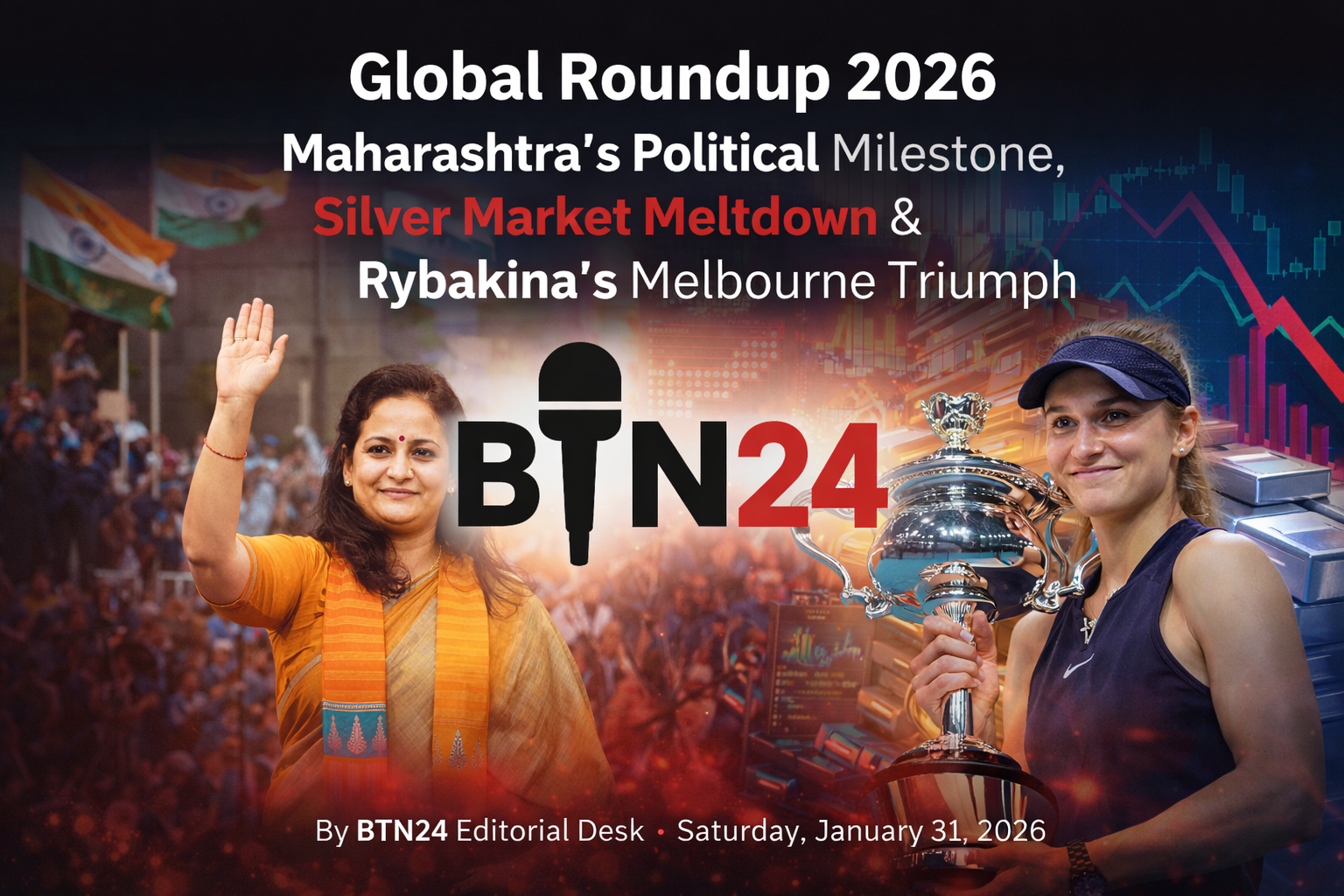
    Global Roundup 2026: Maharashtra’s Political Milestone, the Silver Market Meltdown, and Rybakina’s Melbourne Triumph

    By: BTN24 Editorial Desk | Saturday, January 31, 2026

    As we close the chapter on the first month of 2026, the global landscape has been hit by a series of monumental shifts. From the corridors of power in Mumbai to the high-stakes trading floors of London and the intense heat of the Australian Open, January 31, 2026, has proven to be a day of historic firsts and unexpected shocks.

    At BTN24, we are committed to bringing you the stories that shape our world. Here is your definitive guide to the events that dominated the headlines today.


    1. A New Chapter in Maharashtra: Sunetra Pawar Takes Charge

    In a move that has fundamentally altered the political fabric of India’s most industrialized state, Sunetra Pawar was officially sworn in today as the first female Deputy Chief Minister of Maharashtra.

    Following the recent and sudden passing of her husband, the political veteran Ajit Pawar, Sunetra’s elevation is being viewed as both a symbol of continuity and a strategic masterstroke for the Mahayuti alliance. The ceremony at Raj Bhavan on January 31 was attended by a plethora of leaders who believe her background in grassroots development will provide a much-needed emotional and practical anchor for the party ahead of the upcoming electoral cycles.

    2. Financial Turmoil: The Great Silver Crash

    For commodities investors, Saturday brought a wave of panic. After weeks of a relentless bull run, the “Silver Bubble” seemingly burst today. In a staggering intraday move, silver prices plummeted by nearly ₹20,000 per kg in the Indian market, tracking a massive sell-off in global bullion hubs.

    Financial analysts are attributing this crash to aggressive profit-booking by institutional hedge funds and a sudden pivot toward new industrial technologies that reduce dependence on silver in the EV sector. This “Black Saturday” correction has left many retail investors scrambling, serving as a stark reminder of the volatility inherent in 2026’s economic climate.

    3. International Tensions: The Trump Doctrine and Global Trade

    On the global stage, the ripples of “America First” policies continue to widen. Today, January 31, the White House signaled a more aggressive stance toward international trade agreements, with President Trump appointing Kevin Warsh to lead the US Central Bank—a move seen as a precursor to significant interest rate shifts.

    Simultaneously, the European Union has expressed “grave concern” over the US’s formal withdrawal from key climate commitments. In our neighborhood, the India-EU Free Trade Agreement has reached a critical finalization stage, a development that is reportedly causing significant diplomatic anxiety in Pakistan as India prepares to dominate the European export market.

    4. Sports: Rybakina Reigns Supreme at the Australian Open

    Tennis fans witnessed a masterclass in power and poise today as Kazakhstan’s Elena Rybakina claimed her second Grand Slam title. In a thrilling final at the Rod Laver Arena, Rybakina defeated world number-one Aryna Sabalenka (6-4, 4-6, 6-4).

    Her victory is more than just a personal milestone; it marks the definitive arrival of a new era in women’s tennis. Rybakina’s icy composure under the blistering Melbourne sun on January 31 has earned her the respect of legends and the adoration of a global audience.

    5. Science and Heritage: India’s UNESCO Push

    In a move that celebrates indigenous wisdom, the Government of India has officially submitted its nomination for Meghalaya’s Living Root Bridges for UNESCO World Heritage status. These ancient, bio-engineered structures represent a perfect harmony between humanity and nature—a narrative that India is keen to promote on the world stage as the climate crisis intensifies.


    The BTN24 Perspective

    As the clock strikes midnight on January 31, 2026, the world feels increasingly interconnected yet volatile. We are seeing a shift toward female leadership in India, a massive redistribution of wealth in the markets, and a new generation of sports icons taking the stage.

    2026 is shaping up to be a year of radical transformation. At BTN24.com, we remain your eyes and ears on the ground, delivering the facts as they happen.


  • Global Pulse: Top Stories Shaping India and the World Today

    Global Pulse: Top Stories Shaping India and the World Today

    January 30, 2026 | BTN24 News Desk

    New Delhi: From economic uncertainty in global markets to major diplomatic moves involving India, today’s headlines reflect a world navigating change, caution, and opportunity. As governments respond to financial pressures, geopolitical shifts, and public sentiment, January 30, 2026, stands out as a day of significant developments both at home and abroad.

    India Strengthens Its Global Diplomatic Footprint

    India remained at the center of international attention today as preparations continued for high-level diplomatic engagements with key global partners. Senior officials confirmed that New Delhi is pushing forward with renewed dialogue initiatives focused on trade cooperation, regional security, and energy partnerships. These discussions are seen as part of India’s broader effort to position itself as a stable economic and strategic partner amid global uncertainty.

    At the same time, policymakers emphasized India’s growing role as a bridge between developed and emerging economies. With global supply chains under pressure and geopolitical alliances being reassessed, India’s diplomatic outreach is being closely watched by international observers.

    Global Markets Face Fresh Volatility

    Financial markets across the world witnessed renewed volatility today, with major U.S. indices ending lower amid concerns over inflation, interest rates, and slowing global growth. Investors adopted a cautious approach as uncertainty around monetary policy and corporate earnings continued to influence sentiment.

    Asian markets showed mixed trends, while European stocks traded with modest fluctuations. Commodity prices also reflected nervousness, with precious metals and energy markets responding to shifting demand expectations. Analysts suggest that global markets are entering a phase where economic data and central bank signals will play a decisive role in shaping investor confidence.

    Geopolitical Developments Keep World on Edge

    International relations remained fluid as diplomatic efforts continued in several conflict-affected regions. Global leaders reiterated calls for dialogue and de-escalation, underlining the importance of diplomatic solutions over prolonged confrontation. Humanitarian concerns, particularly in regions affected by conflict and displacement, were also highlighted in international forums today.

    In South Asia, cooperative measures between neighboring countries drew attention, with officials stressing the importance of communication and humanitarian coordination to maintain regional stability.

    Technology and Innovation Drive Policy Conversations

    Technology once again featured prominently in policy discussions, with governments and institutions focusing on artificial intelligence, digital infrastructure, and data security. India’s push toward digital governance and tech-enabled public services continues to be cited as a model for scalable innovation in developing economies.

    Experts believe that responsible AI deployment, cybersecurity preparedness, and digital inclusion will remain defining themes in global policy debates throughout 2026.

    Sports and Culture Offer a Moment of Relief

    Away from politics and markets, sports and cultural events provided moments of optimism and public engagement. Cricket enthusiasm continues to build ahead of major international tournaments, while cultural festivals across Indian cities are celebrating artistic diversity and global collaboration.

    Such events, analysts note, play a vital role in maintaining social morale during periods of economic and political uncertainty.

    India Observes Martyrs’ Day

    Across the country, India marked Martyrs’ Day today, paying tribute to Mahatma Gandhi and other freedom fighters. Ceremonies and remembrance events were held nationwide, reflecting on the values of peace, sacrifice, and national unity. Leaders across political lines emphasized the relevance of these principles in today’s complex global environment.

    The Bigger Picture

    As January draws to a close, today’s developments underline a world at a crossroads. Economic caution, diplomatic engagement, technological acceleration, and cultural resilience are shaping the global narrative. For India, the focus remains on balancing growth with stability while strengthening its voice on the international stage.

    BTN24 will continue to bring you clear, factual, and timely coverage of the stories that matter — from India to the world.

  • 📰 Today’s Top News – January 29, 2026 | BTN24

    📰 Today’s Top News – January 29, 2026 | BTN24

    Welcome to BTN24’s daily news roundup, where we bring you the most important developments from India and across the globe. From major political updates to global affairs, business trends, sports highlights, and entertainment buzz — here’s everything you need to know today.


    🇮🇳 Major News from India

    Tragic Plane Crash Claims Life of Maharashtra Deputy Chief Minister

    India witnessed a heartbreaking incident today as Maharashtra’s Deputy Chief Minister lost his life in a tragic aircraft accident near Baramati. The small aircraft reportedly faced technical issues during landing, leading to the fatal crash.

    Emergency services rushed to the spot, but unfortunately, lives could not be saved. The state government has declared official mourning, while leaders across the country expressed deep condolences. A high-level investigation has been ordered to determine the exact cause of the accident.


    Supreme Court Suspends New UGC Education Rules

    In a major decision impacting India’s education system, the Supreme Court has temporarily put a hold on the newly introduced UGC regulations. The court raised concerns over possible misuse and lack of proper consultation before implementation.

    Education experts and students have welcomed the move, saying it allows time for clearer policies and fair reforms. The next hearing is expected soon, which may shape the future of higher education in the country.


    Economic Survey Shows Strong Growth Momentum

    Ahead of the Union Budget, the government presented the latest Economic Survey in Parliament today. The report highlighted steady economic growth, strong GST collections, rising investments, and improvement in employment indicators.

    According to the survey, India remains one of the fastest-growing major economies despite global challenges. The upcoming budget is expected to focus on infrastructure, digital expansion, and job creation.


    🌍 Key Developments Around the World

    India and European Union Deepen Strategic Ties

    India and the European Union have taken a major step forward by strengthening cooperation in technology, digital infrastructure, cybersecurity, and defense sectors. Leaders from both sides emphasized long-term partnership for innovation and economic stability.

    This growing collaboration is expected to boost trade, technological advancement, and global security cooperation in the coming years.


    Rising Global Tensions Spark Diplomatic Concerns

    Several regions across the world are witnessing rising political and military tensions. Global leaders are urging calm and pushing for diplomatic dialogue to prevent further escalation.

    International organizations are closely monitoring the situation, calling for peaceful solutions and cooperation among nations.


    📊 Business & Economy Updates

    • Gold and silver prices touched new record highs as investors turned to safe assets amid global uncertainty.
    • Indian stock markets experienced mixed trading, influenced by international market movements and upcoming budget expectations.
    • Technology and infrastructure stocks showed positive momentum during the day.


    🏏 Sports Highlights

    • India’s Under-19 cricket team continued their impressive run in the World Cup with another strong performance.
    • Several European football giants secured crucial wins in international tournaments, keeping fans excited across the globe.
    • Preparations for upcoming major sports leagues are gaining momentum.


    🎬 Entertainment & Culture

    • Newly released big-budget movies are performing well at the box office, attracting large audiences.
    • Several popular celebrities announced upcoming projects, creating buzz on social media.
    • Music and OTT platforms are witnessing high engagement this season.


    📌 Final Words

    That wraps up today’s top headlines. Stay tuned to BTN24 for real-time breaking news, in-depth stories, and trusted updates from India and around the world.

    We’ll be back tomorrow with another comprehensive news roundup.

  • India-EU Trade Deal: The “Mother of All Deals” That Will Change the Global Economy

    India-EU Trade Deal: The “Mother of All Deals” That Will Change the Global Economy

    By [Shiva Mehra,BTN24] News Desk January 28, 2026

    In a historic move that has sent ripples through the global financial markets, India and the European Union (EU) have officially signed a comprehensive Free Trade Agreement (FTA). After nearly two decades of intense negotiations, this pact—rightfully called the “Mother of All Deals”—is set to redefine India’s economic landscape and its position on the world stage.

    A New Era for ‘Made in India’

    The agreement opens the doors of the 27-nation European bloc to Indian exporters like never before. With the removal of heavy tariffs, Indian goods will now be significantly cheaper and more competitive in cities from Paris to Berlin.

    Key Sectors Set to Explode:

    • Textiles & Apparel: Indian garments will now enter Europe with Zero Duty, giving a massive boost to local weavers and factories.
    • Agriculture & Marine: Farmers and exporters of seafood, fruits, and processed foods gain direct access to a high-paying consumer base.
    • Gem & Jewellery: This sector is expected to see a 20-25% jump in exports within the first year.

    What’s in it for the Consumer? (Cheaper Luxury)

    It’s not just about exports; Indian consumers have plenty to celebrate. If you have a taste for European luxury, your shopping list just got much more affordable.

    Price Drop Alert: Expected Tariff Reductions

    Product CategoryOld Import DutyNew FTA Duty
    European Luxury Cars110%40% (Phasing to 10%)
    Wines & Spirits150%75% (Phasing to 30%)
    Chocolates & Biscuits45% – 50%0%
    High-end Machinery15%0%

    The IT & Services Boom: Jobs for the Youth

    India is often called the “Backoffice of the World,” and this deal cements that title. The FTA includes a Mutual Recognition Agreement (MRA) for professional qualifications.

    • Ease of Movement: Indian IT professionals, engineers, and healthcare workers will find it much easier to get short-term work visas for EU nations.
    • Digital Trade: Collaborative frameworks for AI and Cybersecurity mean thousands of new high-tech jobs in Bengaluru, Hyderabad, and Pune.

    The “China Plus One” Strategy

    Why now? As the world looks for a reliable alternative to China, the EU has picked India as its primary democratic partner. This deal is as much about politics as it is about money. By aligning with Europe, India secures a stable supply chain and attracts billions in Foreign Direct Investment (FDI).

    “This is more than a trade pact; it is a strategic alliance between two of the world’s largest democracies. It is a win for the Indian worker and the European consumer alike.”


    Conclusion

    The India-EU Trade Deal is a cornerstone of the Viksit Bharat 2047 vision. While there will be challenges in meeting the EU’s strict environmental and labor standards, the long-term benefits far outweigh the hurdles. For the Indian entrepreneur, the message is clear: The world is your market.v

  • Online Gaming Bill Passed Without Debate: What It Means for India

    Online Gaming Bill Passed Without Debate: What It Means for India

    New Delhi | August 21, 2025 (BTN24) – In a move that has stunned both the gaming industry and political observers, the Lok Sabha on August 20 passed the Promotion and Regulation of Online Gaming Bill, 2025, without any debate. The very next day, the Rajya Sabha also cleared the Bill amid opposition protests, setting the stage for a sweeping overhaul of India’s online gaming landscape. The legislation now awaits presidential assent, which is widely expected in the coming days.

    What the Bill Does

    The new law bans all real-money online games, including fantasy sports platforms, poker, rummy, betting, and other stake-based apps. Popular services such as Dream11, MPL, PokerBaazi, Zupee, My11Circle, WinZo, and RummyCircle are among those directly affected.

    The Bill not only prohibits playing such games but also imposes restrictions on advertisements, endorsements, and financial transactions linked to them. Banks, UPI apps, and payment processors will be barred from processing payments for these platforms.

    At the same time, the legislation draws a clear distinction: e-sports and educational/social gaming are exempted and will be actively promoted as safe forms of digital entertainment.

    To regulate this ecosystem, the Bill mandates the creation of a National Online Gaming Authority, which will classify games, grant approvals, handle complaints, and block illegal platforms.

    Penalties and Enforcement

    The Bill prescribes strict punishments to deter violations:

    • Running real-money platforms: Up to 3 years in jail and/or ₹1 crore fine.
    • Advertising such games: Up to 2 years in jail and/or ₹50 lakh fine.
    • Payment facilitation: Up to 3 years in jail and/or ₹1 crore fine.
    • Repeat offences: Up to 5 years in jail and fines up to ₹2 crore.

    Certain offences are classified as cognizable and non-bailable, giving authorities powers of warrantless search and seizure in serious cases.

    Government’s Justification

    Union Minister Ashwini Vaishnaw, who introduced the Bill, said the urgency was necessary because “online money gaming has become a bigger issue than drugs.” He highlighted cases of young Indians taking their own lives after incurring massive losses in online games, calling the legislation a much-needed safeguard for families and society.

    Industry Shock and Economic Fallout

    The decision has sent shockwaves through India’s booming online gaming sector, which was valued at over ₹31,000 crore annually and contributed more than ₹20,000 crore in taxes. Industry reports projected the sector to double by 2028, but the new law has thrown those forecasts into uncertainty.

    Companies backed by global investors—including Tiger Global and Peak XV—now face shutdown risks. Stock markets reacted sharply: Nazara Tech shares plunged over 21% in two days, while Delta Corp also recorded double-digit losses.

    For the thousands employed in the sector, the future now hangs in the balance.

    Opposition Voices Concern

    The Opposition strongly criticized the manner in which the Bill was passed.

    • Karti Chidambaram (Congress) called it a “knee-jerk reaction” and demanded referral to a parliamentary committee.
    • Shashi Tharoor argued that global models show regulation and taxation—not blanket bans—are more effective in tackling gaming addiction while preserving economic opportunity.

    Several industry bodies, including the Federation of Indian Fantasy Sports (FIFS) and the E-Gaming Federation, have warned that the ban could stifle innovation, drive users to unregulated offshore platforms, and cause heavy revenue loss for the government.

    A Turning Point for India’s Digital Future

    The passage of this Bill—amid one of Parliament’s stormiest sessions in recent memory—marks a defining moment for India’s digital economy. Supporters hail it as a necessary shield against addiction and fraud, while critics fear it could push a thriving industry underground.

    For millions of Indian gamers, parents, investors, and entrepreneurs, the coming months will reveal whether this bold legislative gamble proves to be a safeguard—or a setback—for India’s digital future.

  • India–China Relations: A Fragile Reset with Human Hopes and Lingering Anxieties

    India–China Relations: A Fragile Reset with Human Hopes and Lingering Anxieties

    New Delhi/Beijing, August 21, 2025 – After years of hostility and silence, India and China — two neighbors who share not just borders but also centuries of history — are quietly attempting to mend broken ties. From restoring flights to reviving cultural exchanges, recent steps mark what some call the “fragile reset.” But beyond the numbers and policy briefings, ordinary people on both sides are watching closely, wondering: Will this time be different?


    Years of Distrust

    Since the Galwan Valley clash of 2020, where 20 Indian soldiers and four Chinese troops lost their lives, the relationship spiraled downward. Military standoffs, suspended trade agreements, blocked visas, and even cancelled student exchanges froze what was once a steadily growing partnership.

    Border villagers in Ladakh still recall those nights when the mountains echoed with tension. “Hum sirf shanti chahte hain,” said Dorje, a farmer in Leh. “Politics alag hai, par hamari zindagi sirf aman par tikki hai.” (We only want peace. Politics is separate, but our lives depend on peace.)


    A New, Cautious Beginning

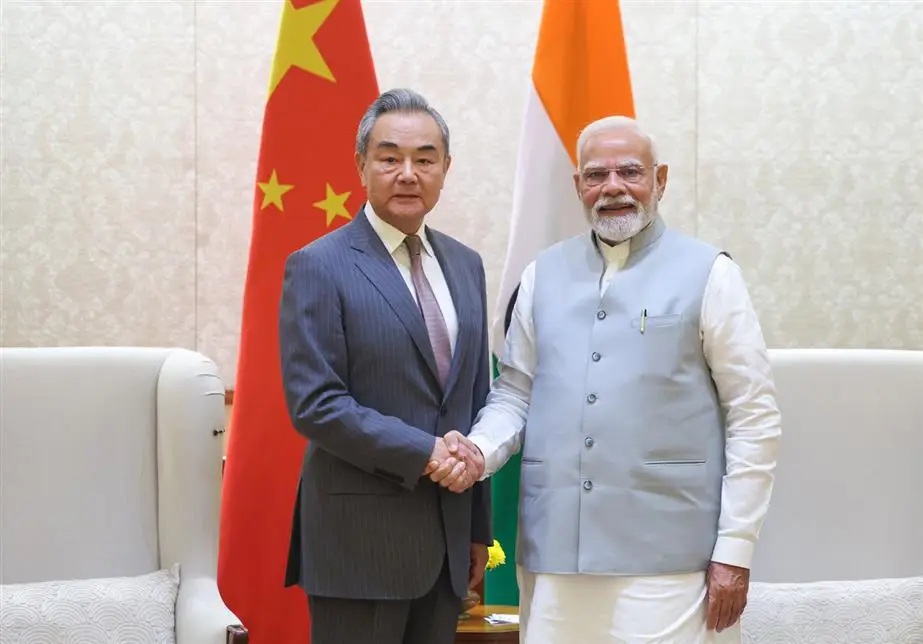
    This week, Chinese Foreign Minister Wang Yi’s visit to New Delhi signaled a thaw. After hours of talks, both sides agreed to:

    • Resume flights suspended since the pandemic.
    • Reinstate journalist visas, allowing reporters back into each other’s countries.
    • Reopen cultural and student exchanges — a huge relief for thousands of Indian students who had been stuck midway through degrees in China.
    • Restart military-to-military talks on stabilizing border patrols.

    “It’s not friendship yet, but at least it’s communication,” said an Indian diplomat off record.


    Global Pressures Driving Diplomacy

    What triggered this shift? Part of the answer lies thousands of miles away in Washington. The U.S. decision to push tariffs up to 50% on imports has rattled both Beijing and New Delhi.

    • China, already locked in a trade war with the U.S., cannot afford more isolation.
    • India, facing one of Asia’s sharpest earnings downgrades, knows instability with China will only deepen its economic vulnerability.

    As one Mumbai-based trader put it: “Politics thodi der ke liye side rakho. Business ruk gaya to rozgaar khatam ho jaayega.” (Forget politics for a moment — if business stops, jobs will disappear.)


    Flashpoint: The River that Connects Lives

    But mistrust runs deep. China’s plan to build a mega-dam on the Yarlung Tsangpo River in Tibet — which becomes the Brahmaputra in India — has triggered alarm.

    In Assam, fisherman Abdul Rahman looks at the river every morning with worry. “Yeh nadi hamari rozi hai. Agar paani ka flow badal gaya toh hum kya karenge?” (This river is our livelihood. If the water flow changes, what will we do?)

    Environmentalists fear flooding, displacement, and ecological disruption. For many in India’s Northeast, the dam isn’t just geopolitics — it’s survival.


    The Economic Ties That Bind

    Despite tensions, trade between the two countries hit $136 billion in 2024, with India importing crucial goods — from pharma ingredients to electronics — from China. But the imbalance is stark: India’s deficit crossed $100 billion.

    Still, business owners see opportunity in reopening channels. A textile exporter in Tiruppur said: “Ek baar flight aur cargo normal ho jaye, humare orders revive ho jaayenge. Workers ko kaam milega. Simple.”


    The Strategic Chessboard

    Globally, India has tilted closer to the U.S. and the Quad alliance (Japan, Australia, U.S.), while China has tightened its Russia ties. Both remain rivals in South Asia, Africa, and the Indian Ocean.

    Yet, neither wants open conflict. Instead, they are finding small spaces for cooperation — in BRICS, climate talks, and trade forums. For now, pragmatism is winning over pride.


    The Human Cost of Silence

    Perhaps the clearest sign of the thaw is visible among students. Over 23,000 Indian students, mostly in medicine, were stranded when China closed borders after 2020.

    Rohit Sharma, a 23-year-old from Patna, had to put his MBBS dream on hold. “Main roz news check karta hoon,” he said. “Agar visa khul gaya toh meri zindagi track par aa jaayegi.” (I check the news daily. If visas reopen, my life will get back on track.)

    Families divided by business, education, and cultural ties are also waiting. As one Delhi-based parent put it: “Hamare bacche ka future diplomacy par atka hai.” (Our children’s future is stuck in diplomacy.)


    A Fragile Reset

    Experts caution against over-optimism. Border disputes remain unresolved, mistrust lingers, and both governments continue to jostle for influence in Asia.

    Still, even a limited reset matters. “This is not reconciliation,” said a Delhi-based analyst. “It’s a pause, born out of necessity. But even pauses matter — they give space for people to breathe.”

    For millions on both sides, the hope is simple: fewer confrontations, more conversations.


    Conclusion

    India and China’s reset is not a grand friendship — it’s a delicate balancing act shaped by economics, global politics, and human need. The next few months will reveal whether this fragile peace holds or collapses back into suspicion.

    But for villagers along the border, for students stuck mid-degree, and for traders waiting for goods to move again, even this fragile thaw feels like a breath of fresh air.


  • Aadhaar 2025: 15 Crucial Updates Every Indian Must Know — BTN24 Exclusive

    Aadhaar 2025: 15 Crucial Updates Every Indian Must Know — BTN24 Exclusive

    By BTN24 Digital Desk | Updated July 2025
    India


    “Aadhaar is more than just an ID — it’s your financial, legal, and digital identity in India. Staying updated isn’t a choice anymore — it’s your responsibility.”


    Why You Should Read This

    As we move deeper into a digital-first India, the Aadhaar card has become the foundation for accessing almost every public and private service — from banking and taxation to pension, subsidy, SIM activation, and education.

    Yet, millions of people across India are unaware of how to secure, update, and use their Aadhaar correctly, especially with the new changes announced for 2025.

    At BTN24, we believe information is empowerment. So here’s our verified list of the top 15 Aadhaar updates and facts every Indian must know — because ignoring them could cost you money, access, and identity protection.


    BTN24 Deep Dive: 15 Must-Know Aadhaar Facts for 2025


    1. Aadhaar Is Not Proof of Citizenship

    Aadhaar is issued to residents of India, not necessarily citizens. It verifies identity and address, but cannot be used to prove nationality under any legal framework.


    2. Aadhaar Updates Are Free Till Sept 14, 2025

    UIDAI has extended free online Aadhaar update services. If you need to change your name, address, or birth date, visit myaadhaar.uidai.gov.in and complete the update using OTP-based login.


    3. Biometric Update is Mandatory at Age 5 and 15

    Children who enrolled for Aadhaar before age 5 or 15 must update their biometric data (fingerprints, iris scan, and photo) once they cross those age milestones. Failure to do so may lead to Aadhaar becoming inactive for official use.


    4. Always Use Masked Aadhaar When Sharing

    To reduce the risk of identity theft, download and use the Masked Aadhaar. It only displays the last 4 digits of your Aadhaar number, keeping the rest private.


    5. Link Aadhaar with PAN, Bank, and UPI

    This is crucial. If your Aadhaar is not linked with your PAN card, bank accounts, and UPI apps, your financial services may get temporarily blocked or rejected during KYC checks.


    6. Aadhaar Is Voluntary for Private Services

    As per the Supreme Court of India, private entities (schools, mobile operators, companies) cannot force Aadhaar as a condition for service. Aadhaar is optional, not mandatory, unless specifically required by law.


    7. Lost Aadhaar? Order a PVC Card for ₹50

    UIDAI allows you to order an official, waterproof, secure PVC Aadhaar Card for just ₹50. It includes a hologram, secure QR code, and micro text — better than paper prints or photocopies.


    8. Aadhaar Seeding is Mandatory for Pensioners

    Retired individuals must ensure that their Aadhaar is linked with the Pension Payment Order (PPO) and bank account to avoid delay or rejection in monthly disbursals.


    9. You Can View Aadhaar Authentication History

    Anyone can check when and where their Aadhaar was used for verification via the UIDAI portal. This helps detect unauthorized use and improve digital safety.


    10. Use Virtual ID (VID) Instead of Aadhaar Number

    You can generate a Virtual ID, a temporary 16-digit number that works like Aadhaar during eKYC. It allows authentication without revealing your actual Aadhaar number — safer for digital transactions.


    11. Blue Aadhaar for Children Below 5

    Children below the age of 5 receive a Blue Aadhaar, which doesn’t require biometrics. However, biometric updates are mandatory at ages 5 and 15.


    12. New Aadhaar PVC Cards are Smarter and Safer

    The upgraded PVC cards now include security features like ghost image, hologram, micro text, and UV printing, making them tamper-proof and more durable than standard printouts.


    13. Use DigiLocker to Store Aadhaar Securely

    Instead of emailing or uploading your Aadhaar copy, link it with DigiLocker, the official cloud storage app by the Government of India. It ensures Aadhaar is accessible, digitally signed, and encrypted.


    14. Avoid Middlemen – Use UIDAI Official Portals

    Most Aadhaar updates and reprints are either free or cost ₹50. Avoid unauthorized agents who often charge ₹100–300 for the same services. Always use uidai.gov.in.


    15. Misuse of Aadhaar is a Punishable Offense

    Aadhaar fraud, impersonation, or unauthorized sharing of Aadhaar numbers is a legal offense under the Aadhaar Act, 2016. The penalty can include fines and imprisonment.


    BTN24 Recommends – Safety Tips

    1. Use Masked Aadhaar or VID when possible
    2. Never share OTPs linked to Aadhaar with anyone
    3. Avoid uploading Aadhaar to WhatsApp, Drive, or email
    4. Check Aadhaar usage logs monthly
    5. Rely on official UIDAI channels only


    Final Words from BTN24

    Aadhaar is no longer a basic document — it’s your entry point into India’s digital economy. Used right, it simplifies your life. Used wrong, it can complicate everything from banking to benefits to legal identity.

    Stay informed. Stay secure.
    Share this article with your family, especially senior citizens, students, and digital first-timers.

    For more verified updates, stay tuned with BTN24 – India’s voice in the digital age.

  • ☔ India Braces for 15 Days of Torrential Rain: IMD Issues Nationwide Alert

    ☔ India Braces for 15 Days of Torrential Rain: IMD Issues Nationwide Alert

    Image credit: Aldward Castillo / Unsplash

    New Delhi, July 4, 2025
    The India Meteorological Department (IMD) has issued a sweeping 15-day alert warning of heavy to extremely heavy rainfall across multiple regions of the country, triggering concerns over flooding, landslides, and travel disruptions.

    According to IMD forecasts, the intense monsoon surge will affect states including Maharashtra, Himachal Pradesh, Uttarakhand, Gujarat, Odisha, Assam, and West Bengal, with rainfall expected to peak between July 5 and July 9. Metro cities like Delhi, Mumbai, Kolkata, and Bengaluru are also likely to experience intermittent downpours, leading to potential waterlogging and delays in air and rail services.

    “A red alert has been issued for several districts due to the risk of flash floods and landslides, particularly in hilly terrains and river-adjacent zones,” an IMD official stated during a press briefing.

    Key risks outlined by the IMD include:

    • Flooding in low-lying urban areas
    • Disruption of rail and road transport
    • Potential landslides in Northern and Northeastern states
    • Gusty winds up to 65 km/h along the coastal belts
    • Lightning strikes across the Gangetic plains

    Fishermen have been advised to avoid venturing into the Arabian Sea and Bay of Bengal during this period, as rough sea conditions and high tides are expected to persist.

    Disaster management authorities across several states have already begun pre-deployment of rescue teams and sandbagging efforts in vulnerable zones.

    As the monsoon strengthens its grip, residents are urged to stay indoors during peak rain hours, monitor weather updates, and take necessary precautions.

    This extended rain spell marks one of the most aggressive monsoon phases in recent years—underscoring the increasing need for urban flood preparedness and climate resilience.

  • 💰 RBI Announces ₹1 Lakh Crore Reverse Repo Auction to Absorb Surplus Liquidity

    💰 RBI Announces ₹1 Lakh Crore Reverse Repo Auction to Absorb Surplus Liquidity

    Image credit: Nikola Tomašić / Unsplash

    In a calibrated step to manage surplus liquidity in the financial system, the Reserve Bank of India (RBI) has announced a ₹1 lakh crore seven-day variable rate reverse repo (VRRR) auction, scheduled for Friday, July 4.

    The decision comes as surplus liquidity in the banking sector touched approximately ₹3.75 lakh crore on July 2, prompting the central bank to act swiftly to bring short-term interest rates closer to the policy repo rate of 5.5%.

    “On a review of the current and evolving liquidity conditions, it has been decided to conduct a Variable Rate Reverse Repo auction on July 4,” the RBI said in its official communication.

    The RBI also cancelled a previously planned 14-day VRRR operation, replacing it with this shorter-term measure to better align with its liquidity management strategy.

    🔍 Why It Matters:

    • The reverse repo auction enables banks to temporarily park their excess funds with the RBI, helping drain out surplus money from the system.
    • It is a critical tool to control volatility in overnight rates like the call money rate and MIBOR.
    • The move indicates the RBI’s intent to maintain financial stability without altering its policy stance.

    Market participants view the central bank’s action as a sign of its proactive approach in fine-tuning monetary operations while keeping inflation risks and interest rate alignment in check.

    This marks the first major liquidity absorption move of this scale since November 2024, reinforcing the RBI’s focus on orderly money market functioning.

  • India Clears ₹1.05 Lakh Crore Defence Acquisition Deal to Boost Combat Capabilities

    India Clears ₹1.05 Lakh Crore Defence Acquisition Deal to Boost Combat Capabilities

    Image: Devansh Bose / Unsplash

    In a landmark move to strengthen national security and promote indigenous defence manufacturing, the Government of India has approved a ₹1.05 lakh crore defence acquisition package. The decision, taken by the Defence Acquisition Council (DAC) chaired by Defence Minister Rajnath Singh, includes armoured fighting vehicles, electronic warfare systems, and advanced missile systems.

    The deal is a significant step under the ‘Atmanirbhar Bharat’ initiative and is aimed at reducing India’s reliance on foreign military imports. Most of the procurement will be executed by Indian defence firms, with increased participation from private sector companies and start-ups.

    According to senior officials, the move will bridge critical capability gaps across the Army, Navy, and Air Force, while also sending a strong strategic message to neighbouring adversaries. Experts see this as a major push towards building a self-reliant and modern military force.