Author: MOHIT JAT

  • Health Alert 2026: Nipah Virus Scare in West Bengal and a New Breakthrough in Cancer Treatment

    Health Alert 2026: Nipah Virus Scare in West Bengal and a New Breakthrough in Cancer Treatment

    By BTN24 Health Desk | January 28, 2026

    West Bengal is currently on high alert as health authorities report a fresh scare linked to the deadly Nipah virus. At the same time, scientists across the globe have announced a promising breakthrough in cancer treatment, offering hope to millions of patients. These two major developments highlight both the challenges and progress in global healthcare in 2026.


    Nipah Virus Cases Raise Concern in West Bengal

    Health officials in West Bengal have confirmed suspected cases of Nipah virus infection in the districts of North 24 Parganas and Nadia. The state government has immediately activated emergency response teams, increased hospital preparedness, and launched contact tracing efforts to prevent further spread.

    The Nipah virus, known for its high fatality rate, is transmitted from animals to humans and can also spread through close human contact. Symptoms include fever, headache, breathing difficulties, and in severe cases, encephalitis (brain inflammation).

    Authorities have urged citizens to:

    • Avoid consuming fruits partially eaten by animals
    • Maintain proper hygiene
    • Report symptoms immediately to nearby health centers

    The Union Health Ministry has also sent a special medical task force to assist the state administration.

    Dr. Anirban Mukherjee, a senior virologist at Kolkata Medical College, said,
    “Early detection and isolation are crucial. The public should not panic but remain cautious.”


    Global Breakthrough in Cancer Treatment Brings New Hope

    While the Nipah scare has raised alarm, a positive development has emerged from the medical research community. Scientists from an international research consortium have announced a groundbreaking cancer therapy based on advanced immunotherapy and AI-driven drug targeting.

    The new treatment focuses on training the body’s immune system to identify and destroy cancer cells more effectively, with fewer side effects than traditional chemotherapy.

    Key highlights of the breakthrough include:

    • Over 80% success rate in early clinical trials
    • Reduced recovery time for patients
    • Lower damage to healthy cells

    According to Dr. Maria Lopez, lead researcher of the project,
    “This therapy could revolutionize cancer treatment in the coming decade and significantly improve survival rates.”

    Experts believe this innovation may soon be available for major cancers such as lung, breast, and blood cancer after further testing.


    A Year of Challenges and Progress in Healthcare

    The dual developments reflect the evolving nature of global health. On one hand, infectious diseases like Nipah continue to pose serious threats, especially in densely populated regions. On the other hand, medical science is advancing rapidly, bringing new hope for life-threatening illnesses such as cancer.

    Public health experts emphasize the importance of strong healthcare infrastructure, quick response systems, and continued investment in medical research.


    Conclusion

    As West Bengal battles the Nipah virus scare, authorities remain focused on containment and public safety. Meanwhile, the promising breakthrough in cancer treatment marks a major milestone in modern medicine.

    The year 2026 stands as a reminder that while health risks persist, human innovation continues to push boundaries toward a healthier future.



  • Top 7 Benefits of Bhringraj Oil for Hair Growth

    Top 7 Benefits of Bhringraj Oil for Hair Growth


    In today’s time, hair fall, dandruff and weak hair have become a common problem for everyone. Thousands of types of shampoos and hair oils are available in the market, but the real natural and effective solution is still hidden in the gems of Ayurveda. One of those gems is Bhringraj, which is also called the “king of herbs for hair”.

    I am a person with a R&D background who will also give you the scientific understanding of why Bhringraj oil is so powerful for hair growth.

    1. Hair Follicle Stimulation

    Bhringraj oil contains alkaloids and flavonoids that promote blood circulation to the scalp.

    When the blood flow to the scalp is proper, the hair follicles get activated and new hair starts growing.

    Clinical studies also observe that regular Bhringraj oil massage lengthens the anagen phase (hair growth cycle).

    2. Controls hair fall

    Stress, pollution and chemical shampoos cause premature hair loss.

    The anti-inflammatory and antioxidant properties of Bhringraj oil soothe the scalp and strengthen hair follicles.

    Naturally reduces hair fall and maintains healthy hair for a long time.

    3. Natural Shine and Softness

    Bhringraj oil contains vitamin E and essential fatty acids that deeply moisturize the hair roots.

    It acts as a natural hair conditioner, making hair silky, shiny and manageable without any chemical serums.

    4. Relief from dandruff and dry scalp

    Dandruff is caused due to dry scalp and fungal infection.

    The antibacterial and antifungal properties of Bhringraj oil control dandruff-causing microbes.

    Regular use keeps the scalp hydrated and reduces itching/flaking.

    A young woman gently massages oil into her hair, showcasing a natural and traditional way to nourish the scalp and promote healthy hair growth.

    5. Prevents premature graying of hair

    In Ayurveda, Bhringraj is called “Keshraj” (King of hair) because it stimulates melanin (natural pigment).

    Bhringraj reduces the risk of gray hair even before melanin gets activated.

    This property is also scientifically proven that Bhringraj extract helps in hair pigmentation.

    6. Stress relief and better sleep

    Massaging the scalp with Bhringraj oil not only nourishes the hair but also reduces stress and anxiety.

    It contains natural compounds that relax the nervous system.

    Stress is a major cause of hair loss, so indirectly this oil gives a double benefit in hair growth.

    7. Strengthens Roots and Thickens Hair

    Regular use strengthens hair roots and increases hair density.

    Bhringraj oil contains proteins and minerals that repair hair roots and give them a thicker and denser look.

    How to use Bhringraj oil for best results?

    Warm oil massage: Warm some oil and massage it on the scalp for 10-15 minutes.

    Leave it overnight: so that the active compounds can penetrate the pores well.

    Wash off next morning: Wash with a mild herbal shampoo.

    Frequency: Best to use 2-3 times a week.

    Summary

    Bhringraj oil is a time-tested and science-backed natural remedy for hair growth. If you are suffering from hair loss, dandruff, premature graying or stress-related problems, this oil can make a big difference for you.

  • Tony de Zorzi Steadies South Africa in Second ODI Against Australia

    Tony de Zorzi Steadies South Africa in Second ODI Against Australia

    BTN24 News Desk | August 22, 2025 | Mackay, Australia

    South Africa’s rising batting talent Tony de Zorzi once again demonstrated his maturity at the international level with a steady 38-run knock in the second One Day International (ODI) against Australia at the Great Barrier Reef Arena in Mackay. While the innings was not a match-defining hundred, it provided much-needed stability to South Africa’s innings after an early collapse and reinforced his growing reputation as one of the team’s most dependable top-order batsmen.


    Toss and Team Selections

    South African captain Aiden Markram, standing in for Temba Bavuma who was rested as part of workload management, won the toss and opted to bat first on what looked like a tricky two-paced surface. The decision reflected South Africa’s broader strategy of rotating senior players and testing their bench strength in this series. Along with de Zorzi, Senuran Muthusamy was also drafted into the playing XI, highlighting the management’s commitment to giving opportunities to younger talents.

    Australia, meanwhile, came into the contest determined to level the series after their loss in the opening ODI. They fielded a strong side, including Josh Hazlewood, leg-spinner Adam Zampa, and debutant pacer Xavier Bartlett, who was given the responsibility of making early inroads on home soil.


    Early Setback and De Zorzi’s Composure

    South Africa endured a nightmare start when Xavier Bartlett, playing his debut ODI, dismissed stand-in skipper Aiden Markram for a duck with the scoreboard reading just two runs. With the visitors under pressure, all eyes turned to Tony de Zorzi, who walked in with the responsibility of rebuilding the innings.

    De Zorzi initially played cautiously, ensuring that no further wickets fell during the opening spell. He gradually found rhythm, unfurling elegant drives through the off-side and punching deliveries through the gaps. His ability to counter pace with a straight bat and adjust quickly to Bartlett’s bounce was particularly impressive. Together with Matthew Breetzke, he steadied the innings and began to shift momentum back in South Africa’s favor.


    Zampa Strikes, but Partnership Holds

    De Zorzi looked set for a bigger score when Adam Zampa intervened. The leg-spinner, known for breaking partnerships, outfoxed the left-hander with flight and subtle turn. De Zorzi miscued a shot and was caught and bowled for 38 runs off 39 deliveries, including five crisply struck fours. His dismissal, just before the drinks break, ended a promising partnership but left South Africa in a more stable position than when he had arrived at the crease.

    Though the innings did not culminate in a half-century, its value was significant. De Zorzi’s time at the crease blunted Australia’s new-ball attack, allowed Breetzke to settle, and prevented the Proteas from slipping into deeper trouble.


    Breetzke and Stubbs Take Charge

    With de Zorzi back in the pavilion, Matthew Breetzke shouldered the responsibility of anchoring the innings. Displaying maturity and confidence, he reached his fourth consecutive ODI half-century, a testament to his excellent run of form. His ability to rotate the strike and punish short deliveries provided South Africa with momentum during the middle overs.

    Tristan Stubbs provided the fireworks, smashing a towering six that drew loud cheers from the packed Mackay crowd. Their partnership ensured that South Africa maintained a healthy run rate despite losing their in-form opener.


    Australian Bowlers Maintain Pressure

    Australia’s bowlers, however, refused to let the game slip away. Josh Hazlewood maintained his trademark discipline with the new ball, Xavier Bartlett continued to impress with bounce and movement on debut, while Adam Zampa was once again the standout. His control and variations in the middle overs troubled the Proteas and brought the home side crucial breakthroughs. Part-timer Travis Head also chipped in with economical overs, slowing down the scoring rate.


    Series Context

    This three-match ODI series (August 19–24, 2025) holds significant importance for both teams as they prepare for the next ODI World Cup cycle. South Africa’s strategy of resting Bavuma and giving opportunities to de Zorzi and Muthusamy illustrates their long-term planning to build depth in the squad. For Australia, the focus remains on regaining confidence after inconsistent performances in the past year.


    Tony de Zorzi: Player Profile

    • Full Name: Tony de Zorzi
    • Date of Birth: August 28, 1997 (Pretoria, South Africa)
    • Batting Style: Left-hand bat
    • International Debut: Test debut vs West Indies (February 2023), ODI debut vs West Indies (March 2023)
    • ODI Career (up to 2nd ODI vs Australia, 2025):
      • Matches: 14
      • Runs: 482
      • Average: 37.07
      • Strike Rate: 95.82
      • 100s/50s: 1/3
      • Highest Score: 119* (vs India, his maiden century)

    His unbeaten 119 against India remains the high point of his ODI career, but his 38 in Mackay, though modest, carried equal importance because of the match situation.


    Conclusion

    Tony de Zorzi’s 38-run contribution may not dominate headlines, but it symbolized his growing maturity as a player capable of absorbing pressure and providing stability. Alongside Breetzke’s half-century and Stubbs’ aggressive cameo, his innings helped South Africa build a competitive foundation on a challenging surface.

    For the Proteas, this match was not just about runs or wickets—it was about resilience, depth, and belief. And in Tony de Zorzi, South Africa may have found a reliable top-order pillar for the future.

  • U.S. Tariffs Threaten to Slow India’s Growth Story

    U.S. Tariffs Threaten to Slow India’s Growth Story

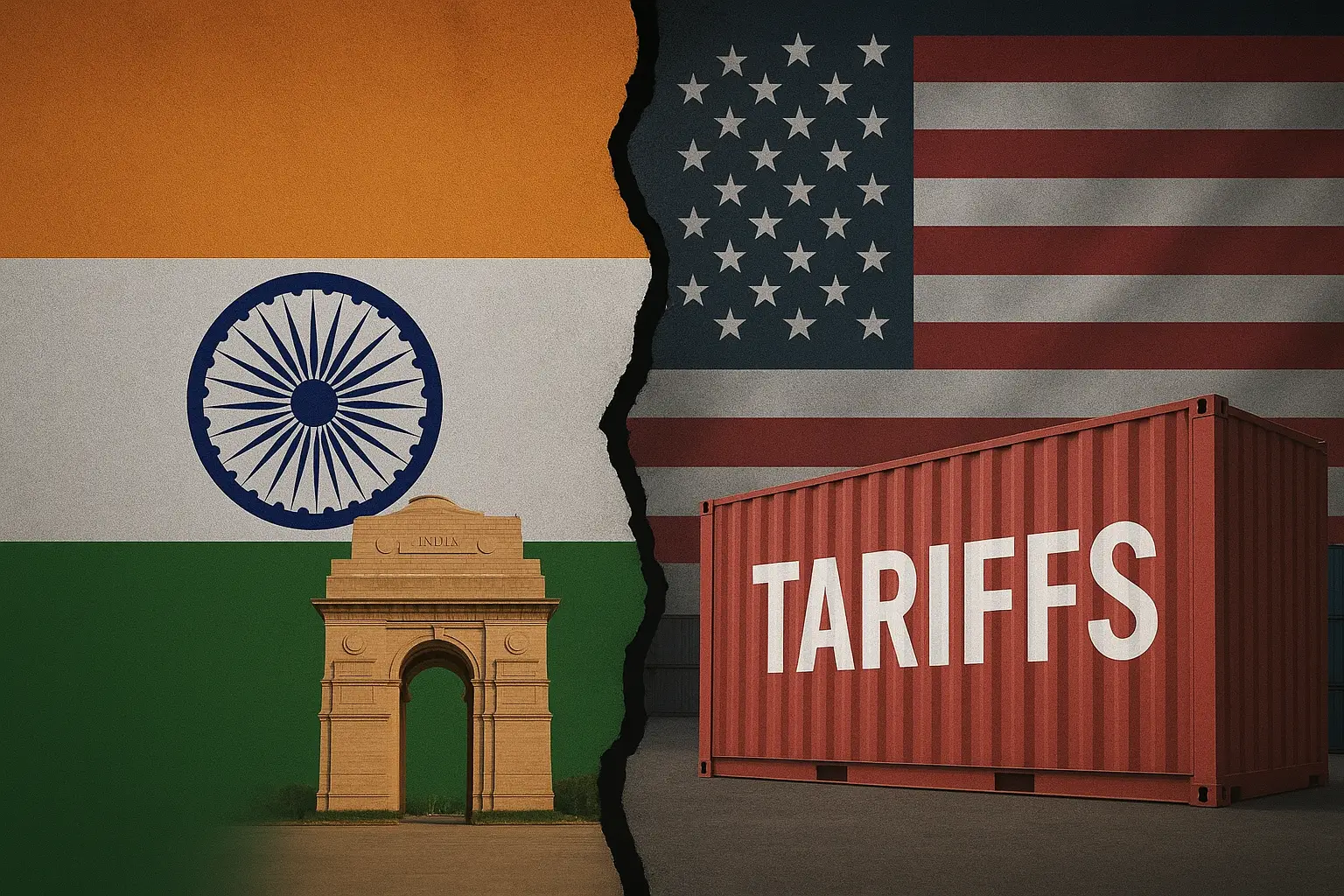
    New Delhi, August 21, 2025 – For much of the past decade, India has been hailed as the world’s fastest-growing major economy, a country balancing rapid digitalization, booming consumption, and global investor confidence. But that optimism is now facing a fresh challenge: the looming threat of steep U.S. tariffs.

    The Sharpest Downgrade in Asia

    Indian companies have just recorded the steepest earnings downgrade in Asia. Analysts cut profit estimates for the next 12 months by an average of 1.2%, reflecting rising fears that American trade barriers could disrupt growth. While this figure may seem modest, the signal is powerful — global investors are beginning to lose some of their earlier confidence in the Indian market.

    Until recently, India was the top choice for Asian fund managers, ahead of China and other emerging markets. But the tariff threat has shifted sentiment. India has slipped from being seen as a “must-own” growth story to one that carries new uncertainties.

    Tariffs and Their Potential Impact

    The United States is considering tariffs of up to 50% on a broad range of imports. For India, the direct exposure might appear limited — only about 9% of corporate revenues come from the U.S. market. But the consequences go far beyond those numbers.

    Economists warn that the tariffs could shave as much as 1 percentage point off India’s GDP growth. With India currently projected to grow at around 6.5% this year, such a slowdown would be felt across industries, jobs, and household incomes.

    “Trade wars rarely stop at direct numbers. They create second-order effects: disrupted supply chains, falling investor confidence, and delayed investment decisions,” explained a senior analyst at a Mumbai-based brokerage.

    The Sectors Under Pressure

    Several sectors are already bracing for impact:

    • Automobiles: India exports a significant volume of cars and auto components to the U.S. Higher tariffs could make them uncompetitive overnight.
    • Consumer goods: From textiles and garments to electronics, many Indian companies rely on U.S. buyers. Price hikes would threaten their global market share.
    • Capital goods and machinery: With rising costs and uncertainty, Indian manufacturers risk losing contracts to Southeast Asian rivals like Vietnam and Indonesia.

    The Investor Mood Turns Cautious

    The change is visible in financial markets. Foreign portfolio investors, who pumped billions into India last year, are turning cautious. Some are reallocating funds to smaller Asian economies less exposed to U.S. trade policy.

    “India remains a growth story, but the tariff risk is now part of every investor conversation,” said a Hong Kong–based strategist.

    The Human Angle – Jobs and Livelihoods

    Beyond balance sheets and market charts, the human impact could be significant. If demand for Indian exports falls, factories producing cars, garments, and electronics may scale back operations. That could mean job losses for thousands of workers, particularly in manufacturing hubs like Gurugram, Pune, and Tiruppur.

    For small and medium enterprises (SMEs), which often supply larger exporters, the pain could be sharper. Many operate on thin margins and lack the financial cushion to absorb sudden losses. “We already work on 2-3% margins. If U.S. buyers cancel orders, we cannot survive for long,” said a textile manufacturer from Tamil Nadu.

    How India Can Respond

    Policymakers in New Delhi are aware of the risks. Three key strategies are being discussed:

    1. Strengthening Domestic Demand: With a 1.4 billion-strong population, India’s internal market is itself a powerful growth engine. Government spending and consumer incentives could help absorb external shocks.
    2. Diversifying Export Markets: Indian trade officials are intensifying talks with Europe, Africa, and Latin America to reduce reliance on the U.S. and China. Bilateral trade agreements could open new doors.
    3. Boosting Self-Reliance: Under programs like Make in India and Atmanirbhar Bharat, India is aiming to expand domestic manufacturing and reduce vulnerability to external disruptions.

    A Test for India’s Growth Dream

    For now, India’s growth story remains intact — but tested. The country’s strong digital economy, rising middle class, and infrastructure push provide resilience. Yet the global environment is becoming more complex, with protectionist trade policies threatening open markets.

    India’s challenge is to turn this crisis into opportunity. If it can strengthen its domestic economy, diversify its partnerships, and accelerate reforms, it may not only withstand the tariff shock but also emerge stronger.

    As one Delhi-based economist put it: “The tariffs are a reminder that India cannot rely solely on global goodwill. It must build resilience at home while engaging smartly abroad.”

    Conclusion

    The U.S. tariffs are more than a trade dispute — they are a stress test for India’s ambition to become the next global economic powerhouse. Whether India weathers this storm or stumbles will depend on how quickly it adapts, innovates, and protects its people from the fallout.

    For millions of Indians hoping for better jobs and rising incomes, the stakes could not be higher.

  • Mumbai Rains Paralyze City: Chaos, Courage, and Calls for Better Preparedness

    Mumbai Rains Paralyze City: Chaos, Courage, and Calls for Better Preparedness

    Mumbai, August 19, 2025: For three consecutive days, Mumbai has been battered by relentless monsoon rains that have brought India’s financial capital to a standstill. On Monday, August 18, the city witnessed some of the heaviest rainfall of this season, leading the India Meteorological Department (IMD) to issue a “Red Alert” across the region. Schools and colleges were ordered shut, offices struggled with absenteeism, and daily commuters faced a nightmare as waterlogging and traffic chaos gripped the city.


    Record Rainfall in 24 Hours

    The numbers tell a dramatic story. Several parts of Mumbai recorded over 100 mm of rain in just 24 hours. Dahisar topped the charts with 188 mm, followed by Kandivali (150 mm), Vikhroli (135 mm), Chembur (124 mm), while Santacruz and Juhu reported 123 mm each. These staggering figures underline the intensity of Mumbai’s rain fury, making it one of the wettest spells of the year so far.


    Schools in Confusion, Parents in Panic

    What caught many families off guard was the last-minute decision by the Brihanmumbai Municipal Corporation (BMC) to declare a half-day holiday for schools and colleges. While the order was intended to ensure student safety, many institutions received the notification late, leaving students stranded in flooded streets and parents scrambling to arrange pickups.

    In Matunga, a school bus was stuck in waist-deep water. Local police and volunteers formed human chains to rescue the children and guide them to safety. Stories like these not only highlight the risks children face in extreme weather but also reflect the spirit of quick response and human compassion.


    Public Transport in Disarray

    Mumbai’s lifeline — its local trains — was heavily disrupted as water levels rose above tracks in several areas. Many trains were delayed or canceled, stranding thousands of commuters. On the roads, the situation was no better. The Western Express Highway, one of the busiest arteries, turned into a slow-moving river of vehicles. Office-goers, delivery workers, and daily wage earners alike were caught in long traffic snarls.

    For many, the choice was stark: either brave knee-deep waters to reach their destinations or return home and lose a day’s wages.


    Alerts and Technology to the Rescue

    On the brighter side, the IMD’s color-coded alert system (Red, Orange, Yellow) proved vital in informing citizens about the severity of the situation. For Tuesday, the forecast shifted to Orange and Yellow alerts, signaling slightly reduced intensity but still urging caution.

    Adding to preparedness, IIT-Bombay in collaboration with IMD has rolled out hyperlocal rain and flood alerts that update every 15 minutes. This initiative, delivered via mobile notifications and online dashboards, is already helping citizens make informed decisions about travel and safety.


    Humanity Amid Hardship

    Even as the rain disrupted lives, it also brought forward acts of kindness and responsibility. Bollywood actor Harshvardhan Rane used his social media to send out a heartfelt appeal:

    “Please avoid ordering food from outside today. Delivery workers are also struggling in these conditions. Let’s cook at home and ease their burden.”

    Such appeals struck a chord with many Mumbaikars, reminding them that small personal sacrifices can make a big difference for those on the frontline during extreme weather.


    The Bigger Picture: Mumbai’s Urban Challenge

    Experts point out that these events are not just about a single day’s rainfall but part of a larger urban and climate challenge. Rapid urbanization, inadequate drainage systems, and the shrinking of natural water-absorbing areas like wetlands and mangroves have made Mumbai increasingly vulnerable to flooding.

    The city’s monsoon story is no longer just about inconvenience — it is about climate resilience. Each season reveals the cracks in infrastructure and governance. Without significant long-term investments in urban planning, Mumbai risks repeating this cycle year after year.


    Lessons from the Deluge

    This week’s rains have offered both warnings and insights:

    • Emergency Alerts Matter: Timely warnings from IMD saved lives, but sudden last-minute decisions — like school closures — created chaos. Clearer communication is vital.
    • Infrastructure Needs Urgent Attention: Waterlogging on highways and train tracks shows that Mumbai’s drainage systems are struggling to cope with extreme rainfall.
    • Community Spirit is Key: From police forming human chains to citizens helping strangers, the resilience of Mumbaikars continues to shine through.
    • Technology Can Empower: Hyperlocal rain alerts and AI-based flood prediction tools are game changers — but their reach must expand to all citizens, especially those without smartphones.

    A City Tested, A City That Endures

    Mumbai’s relationship with the monsoon is one of love and fear. The rains bring relief from summer heat, but they also expose the fragility of urban life in a megacity. This week, the downpour has tested every aspect of Mumbai — its infrastructure, its administration, and its people.

    Yet, as always, the city endures. The sight of strangers sharing umbrellas, shopkeepers offering tea to stranded commuters, and volunteers guiding children to safety is a reminder that while rain may flood the streets, it cannot wash away Mumbai’s spirit.


    In Conclusion

    The heavy rains of August 2025 are more than just a seasonal disruption. They are a wake-up call for a city that prides itself on resilience but urgently needs smarter infrastructure, better communication systems, and stronger climate action plans.

    Until then, Mumbaikars will continue to adapt, adjust, and endure — one flooded street, one disrupted train, and one shared act of kindness at a time.

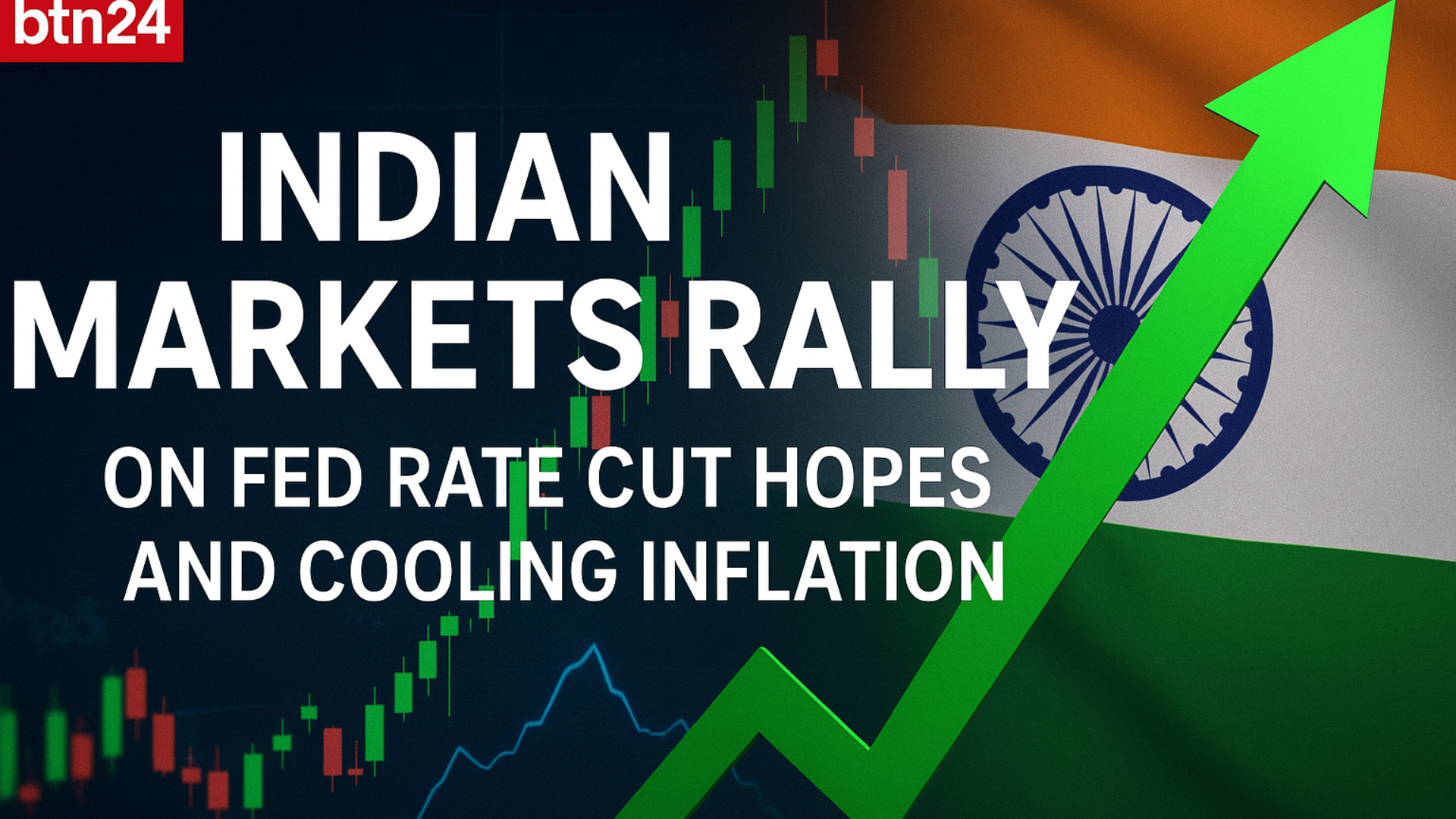
  • Indian Markets Rally on Fed Rate Cut Hopes and Cooling Inflation

    Indian Markets Rally on Fed Rate Cut Hopes and Cooling Inflation

    Sensex jumps 304 points, Nifty crosses 24,600 as investor sentiment turns bullish

    New Delhi, August 14, 2025
    The Indian stock market ended Wednesday’s session on a strong note, propelled by optimism over potential U.S. Federal Reserve rate cuts and the sharp cooling of domestic retail inflation to an eight-year low. The rally was broad-based, with key indices hitting fresh highs, metal and auto stocks leading the charge, and investor wealth swelling by over ₹2 lakh crore in a single day.


    A Day of Strong Gains

    The BSE Sensex surged 304 points, or 0.40%, to close at 81,157.32, while the NSE Nifty 50 climbed 131.95 points (0.54%) to settle at 24,610.15. Both indices opened in the green, sustained momentum throughout the day, and closed near their intraday highs.

    Market breadth favored the bulls — 1,890 shares advanced, 1,420 declined, and 102 remained unchanged on the Bombay Stock Exchange. The Nifty Midcap 150 and Nifty Smallcap 250 outperformed the benchmarks, closing 0.5% and 0.6% higher respectively, underscoring the strength in broader markets.


    Why the Markets are Rising

    1. Cooling U.S. Inflation

    July’s U.S. retail inflation data came in lower than expected, sparking hopes that the Federal Reserve could cut interest rates as early as September. The softer inflation figure eased concerns about prolonged monetary tightening, leading to a global rally that spilled over into Indian equities.

    2. Domestic CPI at 8-Year Low

    Closer to home, India’s Consumer Price Index (CPI) inflation cooled to 1.55% in July, its lowest since 2017, comfortably within the Reserve Bank of India’s target band of 2–6%. Economists believe this could give the RBI additional room to maintain a supportive monetary stance, further bolstering market sentiment.

    3. Strong Sectoral Performance

    • Metals: Riding on higher commodity prices and expectations of renewed infrastructure demand.
    • Auto: Benefiting from steady retail sales and easing input costs.
    • Healthcare & Pharma: Gaining on defensive buying and export optimism.
    • Financials: Supported by healthy quarterly earnings and lower credit cost forecasts.

    Top Gainers and Losers

    Among the Nifty 50 constituents:

    • Top gainers: Tata Steel (+3.2%), JSW Steel (+2.9%), Bajaj Auto (+2.4%), Sun Pharma (+2.3%), and ICICI Bank (+2.1%).
    • Top losers: Tech Mahindra (-1.2%), Infosys (-0.9%), and HCL Tech (-0.7%), as IT stocks saw mild profit-taking following recent gains.

    Investor Wealth Swells

    The sharp rally added an estimated ₹2.05 lakh crore to investor wealth in a single day, with the BSE market capitalization crossing the ₹460 lakh crore mark. Analysts say the market is benefitting from a “Goldilocks” macroeconomic environment — moderate inflation, robust corporate earnings, and supportive global cues.


    SEBI’s Regulatory Push

    On the regulatory front, the Securities and Exchange Board of India (SEBI) proposed new guidelines to formally integrate algorithmic and proprietary trading within stockbroker regulations. The move aims to enhance transparency, curb potential misuse of high-frequency trades, and strengthen oversight. Public feedback on the draft framework has been invited until September 3, 2025.


    Global Market Influence

    Indian equities tracked gains across Asia, where markets rallied on the back of dovish central bank expectations.

    • Japan’s Nikkei 225 climbed 0.6%
    • Hong Kong’s Hang Seng advanced 1.2%
    • China’s Shanghai Composite rose 0.5%

    In the U.S., futures pointed to a higher open for Wall Street indices, with traders pricing in a 70% probability of a Fed rate cut next month.


    Expert Views

    Radhika Shah, Senior Analyst at Axis Securities, told btn24:

    “Cooling inflation both in India and the U.S. has come as a double dose of positive news. This environment could support further gains in Indian equities, but investors should remain cautious of global geopolitical developments that could trigger volatility.”

    Amitabh Sinha, Head of Research at Capital Edge, added:

    “While today’s rally is encouraging, the market has run up considerably. We expect some profit-booking at higher levels, but the medium-term outlook remains bullish as long as macro indicators stay supportive.”


    What This Means for Investors

    For retail investors, the current rally offers opportunities but also warrants discipline:

    • Avoid chasing stocks that have already surged sharply in recent sessions.
    • Focus on sectors with strong earnings visibility such as banking, autos, and select metals.
    • Maintain a diversified portfolio to manage risk.

    Outlook for the Coming Weeks

    Market watchers expect the Nifty to test 24,800–25,000 levels in the short term if global cues remain favorable. Any sharp reversal in U.S. interest rate expectations or a spike in crude oil prices could, however, dampen the bullish momentum.


    Bottom Line:
    The Indian stock market’s rally on August 13, 2025, reflects a rare alignment of domestic and global positives. With inflation cooling and hopes of a U.S. rate cut rising, investors are riding a wave of optimism — one that could carry equities to new record highs in the weeks ahead.

  • ⚡ JP Power Rockets Over 15% — A Surge Backed by Big Moves and Bigger Hopes

    ⚡ JP Power Rockets Over 15% — A Surge Backed by Big Moves and Bigger Hopes

    Mumbai | July 7, 2025

    In a day that lit up the trading screens, Jaiprakash Power Ventures Ltd (JP Power) delivered a dramatic show at the markets, soaring over 15% intraday. It wasn’t just a lucky bounce — this rally was powered by real news, real action, and a sense of renewed belief among investors.

    Two major developments turned up the heat:

    • A high-stakes acquisition bid from none other than the Adani Group for JP Power’s parent company, and
    • A strong and confidence-boosting Annual General Meeting (AGM) held over the weekend.

    By the closing bell, JP Power was just a breath away from its 52-week high, with over 50 million shares traded on the BSE alone — an electrifying reminder of the buzz building around the company.


    🚨 What’s Driving the Buzz?

    1. Adani Steps In — and Everyone’s Watching

    Whispers turned into headlines when news broke that the Adani Group has emerged as the front-runner in a ₹12,500 crore bid to acquire Jaiprakash Associates (JP Associates) — the parent company of JP Power.

    The deal reportedly includes ₹8,000 crore in upfront cash. That’s not small change — that’s strategic muscle.

    Now here’s the kicker: JP Power holds a 24% stake in JP Associates. So if Adani takes control, it could mean serious shifts in structure, synergy, and valuation.

    “If Adani successfully acquires JP Associates, we’re looking at a massive value unlock for JP Power. Synergies between cement and power assets could be game-changing,” said G. Chokkalingam, Founder of Equinomics Research.

    In short: this isn’t just about a deal. It’s about a possible transformation.


    2. AGM That Hit the Right Notes

    While the takeover talk made headlines, the company’s 30th AGM on July 5 brought in substance. Held virtually, the meeting wasn’t flashy — but it was firm.

    Highlights included:

    • Adoption of audited financials for FY 2024–25
    • Reappointment of directors and auditors
    • Reassuring signals from leadership

    Investors left with more clarity and, more importantly, more confidence. And in a market that thrives on sentiment, that confidence counts.


    📊 What the Charts Say

    • Price Action: Up over 15% intraday, with the stock trading well above all its key moving averages.
    • Volume: ~50 million shares changed hands — nearly 6x the usual average.
    • RSI: Nearing 70 — technically approaching “overbought,” but with momentum this strong, that could be fuel, not friction.

    If the momentum holds, the next resistance lies around ₹23.75 to ₹24.50. That’s within reach.


    💰 Financial Snapshot: FY 2024–25

    MetricValue
    Revenue₹1,366.7 crore (vs ₹1,863.6 cr YoY)
    Net Profit (Q4)₹155.7 crore (↓ 73% YoY)
    Net Profit (FY25)₹813.6 crore (↓ from ₹1,022 cr)
    Market Capitalization~₹14,800 crore
    P/E Ratio~18.1x
    P/B Ratio~1.06x
    ROCE / ROE10.3% / 6.8%

    Yes, profits dipped — but the market seems to be betting on what’s coming, not just what’s behind.


    🏗️ The Bigger Picture: JP Associates and the Battle for Control

    JP Associates, deep in insolvency resolution, has attracted some big names:

    • Adani Group
    • Vedanta
    • Dalmia Bharat
    • Jindal Power
    • PNC Infratech

    Creditors have already turned down a late offer from the Suraksha Group due to timing issues — tightening the field. With over ₹57,000 crore in creditor claims, this is one of the bigger battles in India Inc’s debt saga.

    And JP Power is right in the middle of it.


    🔭 What’s Next?

    ✔️ Outcome of the Adani bid — the single most critical trigger
    ✔️ Q1 FY26 earnings — especially debt handling and growth momentum
    ✔️ Technical breakouts — does ₹24 break or bounce?
    ✔️ Sector outlook — how energy & infra shape post-election policy


    💬 Expert Take:

    “This is a textbook re-rating story. JP Power was written off by many — but this may be the comeback script. If the Adani deal clicks, we’re looking at a long-term breakout,” said a Mumbai-based fund manager on condition of anonymity.


    📌 Bottom Line

    JP Power isn’t just rising — it’s rewriting the narrative. From being seen as a struggling power stock, it’s now turning heads on Dalal Street with serious momentum, strategic headlines, and strong backing.

    Whether this surge sustains or pauses for breath, one thing’s clear: JP Power is back on the radar.


    Disclaimer: This article is for informational purposes only. Always consult a qualified financial advisor before making investment decisions.

  • Stock Picks for July 4: UPL & Chennai Petroleum Look Promising

    Stock Picks for July 4: UPL & Chennai Petroleum Look Promising

    Image Credit: Mohamed Hassan / Pixabay

    If you’re tracking the markets this week, keep an eye on UPL and Chennai Petroleum Corporation. According to a recent report by Bajaj Broking Research, both stocks show strong potential for short-term gains.

    The brokerage suggests buying UPL in the ₹670–₹690 range, with a target price of ₹747. The stock has been showing steady momentum, supported by positive market sentiment.

    For Chennai Petroleum, the recommended buy range is ₹700–₹720, aiming for a target of ₹787. Analysts point to strong fundamentals and improving performance in the oil & gas sector as key drivers.

    This comes as the Nifty 50 touched a new nine-month high of 25,669, driven by broad-based market participation and growing investor confidence.

    Note: These are expert suggestions, not financial advice. Always do your own research or talk to a professional before investing.

  • 💱 Rupee Set to Slip Against Dollar as U.S. Jobs Data Shakes Fed Rate Cut Hopes

    💱 Rupee Set to Slip Against Dollar as U.S. Jobs Data Shakes Fed Rate Cut Hopes

    Image by Rupixen on Pixabay

    July 4, 2025 — New Delhi
    India’s currency markets are bracing for a slide in the rupee today, as stronger-than-expected U.S. employment data signals a potential pause in the Federal Reserve’s rate-cut plans—strengthening the dollar and pressuring emerging market currencies.

    According to currency dealers and early market projections, the rupee is likely to open in the ₹85.46–₹85.50 range, down from Thursday’s closing level of ₹85.31 per U.S. dollar.

    “U.S. job growth is outpacing expectations. This has triggered a rally in the dollar index and reduced chances of a July rate cut,” said a senior forex analyst at Mumbai-based investment firm.

    🔍 What Triggered the Slide?

    The catalyst was the June non-farm payrolls report from the United States, which showed employment gains far stronger than forecast. This upbeat data led to:

    • Rising U.S. Treasury yields
    • A sharp rebound in the dollar
    • A sell-off in riskier assets, including emerging market currencies like the rupee

    📉 Market Sentiment & Outlook

    • Traders now believe the rupee could test its support zone at ₹85.30, with further weakness if dollar strength continues.
    • Forward premiums have also eased slightly, indicating a cautious medium-term outlook.
    • The Reserve Bank of India is expected to monitor the situation closely, but no direct intervention is anticipated unless volatility spikes.

    “The global sentiment is clearly dollar-positive for now. The rupee will remain under pressure until the Fed gives more clarity on its stance,” said a currency strategist at a public-sector bank.


    📊 What It Means for India

    • Importers may face rising costs in the short term, particularly for crude oil and electronics
    • Exporters, especially in IT and textiles, may benefit from better conversion rates
    • Investors are advised to stay cautious in forex-linked instruments